
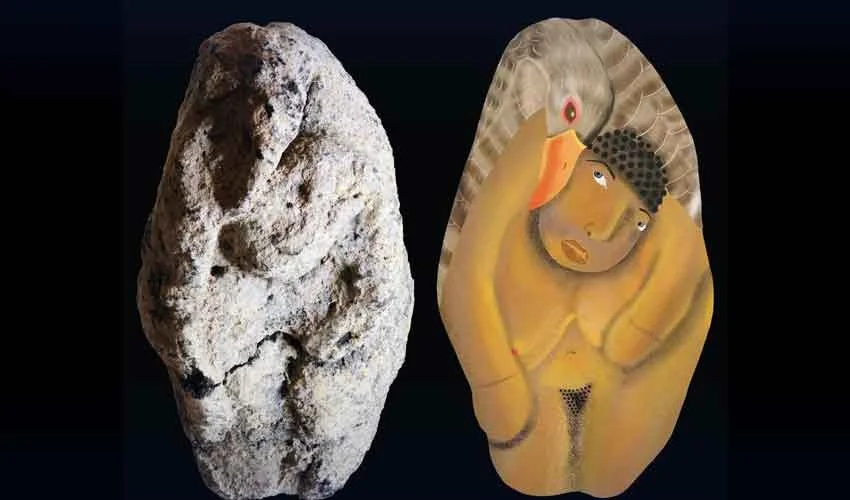
A stunning 12,000-year-old clay figurine, unearthed in northern Israel, is challenging our understanding of prehistoric art and spirituality. Discovered at the Nahal Ein Gev II site, this intricate artifact depicts a crouching woman interacting with a goose, offering a rare peek into the belief systems of one of the world’s earliest settled societies.
The figurine, standing just 1.5 inches tall, is a monumental discovery. Researchers hail it as the earliest-known artistic depiction of human interaction with an animal and the oldest naturalistic portrayal of a woman in Southwest Asia.
But this is more than just a sculpture; it’s a snapshot of a mythological scene. The goose is positioned on the woman’s back with its wings spread in a classic mating posture. Archaeologists interpret this not as a literal scene, but as a powerful symbolic representation.
The craftsmanship is remarkably sophisticated. The unknown artist sculpted the piece to be displayed in a specific light source, using shadow and depth to bring the interaction to life. A trace of red pigment and even the sculptor’s fingerprint are still visible on its surface.
Found buried in a ritualistic structure alongside other meaningful objects, the figurine was likely a sacred object—perhaps an amulet, a storytelling prop, or part of a spiritual installation. It shows that for these ancient people, the relationship with animals was not solely about survival and hunting, but was deeply woven into their spiritual worldview and myths of fertility and creation.
#PrehistoricArt #AncientMythology #NahalEinGev #ArchaeologyDiscovery #NatufianCulture #AncientFigurine #HumanHistory