
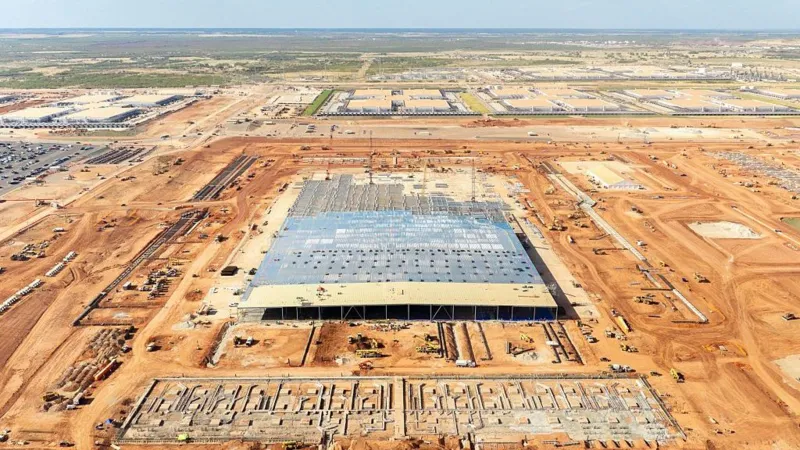
Data centers were a highly motivating topic for many Americans, according to a US midterm voter poll, which has led some to speculate that the election outcome may have been influenced by public reaction against the rise in artificial intelligence (AI) infrastructure building.
News Verify has investigated its involvement in the campaign and the possible ramifications for the AI sector.
What did the voter poll suggest?
According to a study conducted for AP and a group of news organizations, 56% of respondents stated that data centers were a “crucial or major” element in their decision to vote, and 76% stated that they would be against building a new data center in their neighborhood.
Those who claimed to have cast Democratic ballots in this election expressed far more animosity.
This comes after another recent Pew Research survey revealed that over half of Americans believe data centers are “mostly bad” for the environment, household energy expenditures, and quality of life—a significant decline since January.
Texas (595), Ohio (258), and Iowa (117), three of the Senate districts that the Democrats flipped, have far more data centers than the median of 55 across all 50 states.
Additionally, Texas has the most ongoing data center development projects of any state at 31.
However, voters in these states, as elsewhere, would also have been motivated by other considerations. Therefore, we are unable to determine the number of votes or Senate seats that the opposition to data centers directly provided.
However, Texas, Georgia, and Ohio—three crucial states in the US AI build-out—are noteworthy.
What could the election results mean for the future of the AI boom?
Large business expenditures in AI, particularly the building of data centers, have significantly boosted the US economy in recent years.
According to official data, the monthly inflation-adjusted cost of constructing data centers, excluding the IT hardware that goes into them, was $5 billion (£4.2 billion) in August 2026, which is five times more than it was in 2023.
According to a Columbia Business School analysis, the US is presently investing more in AI infrastructure as a percentage of the whole economy than it did in new railroads during the height of that boom in the 19th century.
Texas Seeks Data Centre Compromise
According to analysts from the consulting firm Oxford Economics, legislators have substantial financial incentives to steer clear of laws that would seriously impede the building of data centers, citing the tax income and construction employment they provide.
In order to guarantee that customers’ energy and water costs are not negatively impacted, Deepak Surana of the technology research firm Futurum Group stated that he anticipated “a negotiation, not a moratorium” from Texas state authorities on data centers.
On Thursday, OpenAI, which has a data center in Texas and ongoing initiatives in Ohio, promised to make sure it paid for all of its own power.