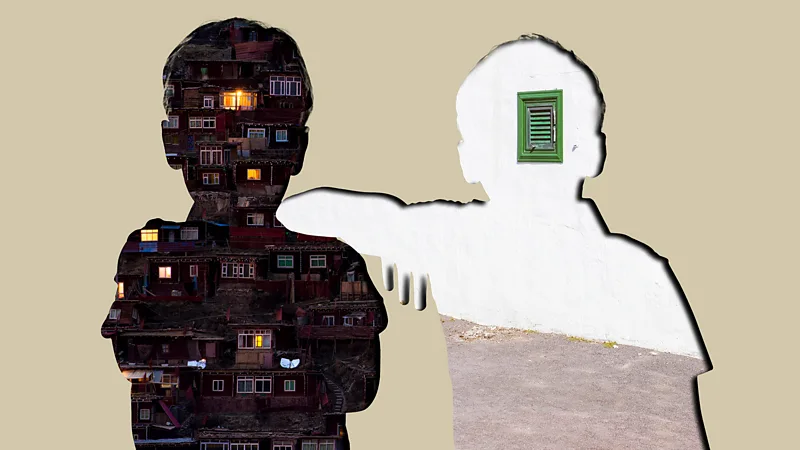
Childhood Memories and Cultural Influence
I remember a hot afternoon in a small village near Kolkata, India. The adults were asleep, and my cousin and I were sitting on the floor, munching puffed rice with mustard oil. She asked, “Do people in Sweden eat cows and pigs?” At the time, I was 10 and felt a little ashamed as I nodded. Then she asked, “So do they eat dogs and cats too?”
Growing up in Sweden, with an Indian mother, I had never thought about it. Vegetarianism was uncommon, and Swedish children saw cows mainly as food. My cousin, however, loved animals and rescued any creature she felt was in danger. She didn’t eat meat.
These moments made me realize how culture shapes the way we think, feel, and behave. If I had grown up in India, would my morals, sense of humor, or dreams be different? Would I still be the same person?
Nature Versus Nurture
Scientists and philosophers have asked these questions for centuries. Now, cross-cultural psychology is starting to provide answers. While DNA gives each person a unique blueprint, it does not fully determine who we are.
Ziada Ayorech, a psychiatric geneticist at the University of Oslo, shares her experience. Born in Uganda, she moved to Canada at age three, spent much of her life in the UK, and recently moved to Norway. “All the places I’ve lived have shaped my perspective. I can’t imagine they didn’t influence me,” she says.
Twin Studies Reveal Insights
Researchers study twins to separate the effects of genetics and environment. Identical twins share nearly all DNA, while non-identical twins share about half. If identical twins are more likely to share a trait than non-identical twins, genetics likely plays a bigger role.
A 2015 study analyzed nearly 50 years of research on 17,000 traits in 14 million twins worldwide. It explored education, political beliefs, and psychiatric conditions. The study concluded that while genetics influence many traits, environment and upbringing play a significant role.
Ching-Yu Huang, a psychologist, says, “Your brain would be very different if you grew up in Taiwan, even with the same DNA.”
The Takeaway
Where and how we grow up shapes more than just our language or habits. It affects our morals, dreams, and the way we see the world. Understanding this helps explain why people from different cultures can think, feel, and act in such diverse ways.