Taipei Pushes Back Against Beijing’s Pressure
Taiwan’s foreign minister says his country will stay calm but firm in the face of growing military pressure from China. He argues that Beijing is trying to disrupt the current balance across the Taiwan Strait and intimidate democratic nations in the region.
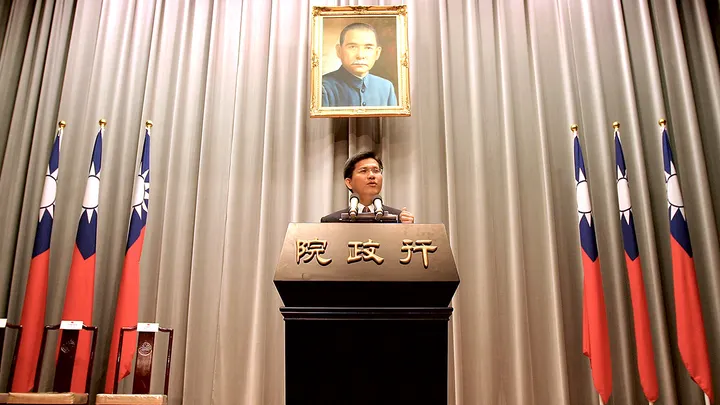
In recent remarks, Foreign Minister Lin Chia-lung said China’s expanding military posture threatens not only Taiwan’s democracy but also stability across the Indo Pacific and beyond. According to Lin, Beijing’s actions reflect a broader push for regional dominance.
Rising Military Activity Raises Alarm
Last June, Chinese aircraft carriers Liaoning and Shandong operated beyond the so called second island chain at the same time. Lin described that move as a clear signal that China’s ambitions stretch well beyond Taiwan itself.
At the same time, he warned that such deployments increase tensions across the Western Pacific. As a result, neighboring countries are watching Beijing’s military strategy more closely.
Although the People’s Republic of China was founded in 1949, it has never governed Taiwan. Officially known as the Republic of China, Taiwan functions as a self ruled democracy and maintains diplomatic ties with a small group of nations, including the Holy See.
However, Beijing insists that Taiwan is part of its territory. In recent years, especially under President Xi Jinping, China has hardened its rhetoric. While earlier leaders spoke of peaceful unification, current statements openly reference the use of force.
Defense analysts widely agree that any invasion would carry enormous risks. Not only would it threaten Taiwan, but it could also draw in partners such as the United States and Japan. Consequently, the economic and security fallout would likely extend worldwide.
Global Stakes: Semiconductors and Shipping
Lin stressed that peace in the Taiwan Strait affects the entire global economy. Roughly 90 percent of the world’s most advanced semiconductors are produced in Taiwan. In addition, nearly half of global commercial shipping passes through the strait.
Because of that central role, Washington continues to treat cross strait stability as a priority. Lin said American leaders understand that Taiwan’s technology sector is closely tied to U.S. economic security.
Strengthening U.S. Ties and Defense
Lin pointed to strategic continuity between different U.S. administrations in supporting Taiwan. He noted that recent American policy documents highlight Taiwan’s geopolitical importance between Northeast and Southeast Asia.
Meanwhile, Taiwan is working to deepen trade and technology cooperation with the United States, especially in artificial intelligence. For example, Taiwan Semiconductor Manufacturing Company has committed 165 billion dollars to projects in Arizona.
At the same time, Taipei is increasing its own defense spending. President Lai Ching-te has announced plans to raise the defense budget above 3 percent of GDP by 2026, with a goal of reaching 5 percent by 2030. Although lawmakers debate details, both major parties support stronger deterrence and closer security ties with Washington.
A Firm but Measured Approach
Despite mounting pressure, Lin said Taiwan does not seek confrontation. Instead, he emphasized that Taipei will not provoke Beijing, yet it will not give in to threats either.
In his view, maintaining peace requires both restraint and readiness. Therefore, Taiwan plans to strengthen partnerships, boost defense capabilities and protect its democratic system without escalating tensions.