
From Plastic to Plant-Based Throws
Mardi Gras beads, once made of glass and treasured by parade-goers, are now mostly cheap plastic necklaces from overseas. Spectators often collect dozens, but many end up on the ground or clogging storm drains. After heavy flooding a few years ago, New Orleans authorities found over 46 tons of beads blocking drainage systems.
To cut environmental harm, the Krewe of Freret banned plastic beads last year. Co-founder Greg Rhoades explained that spectators no longer valued the cheap plastic throws. This year, biodegradable beads are back, produced by Louisiana State University (LSU).
PlantMe Beads: Sustainable and Plantable
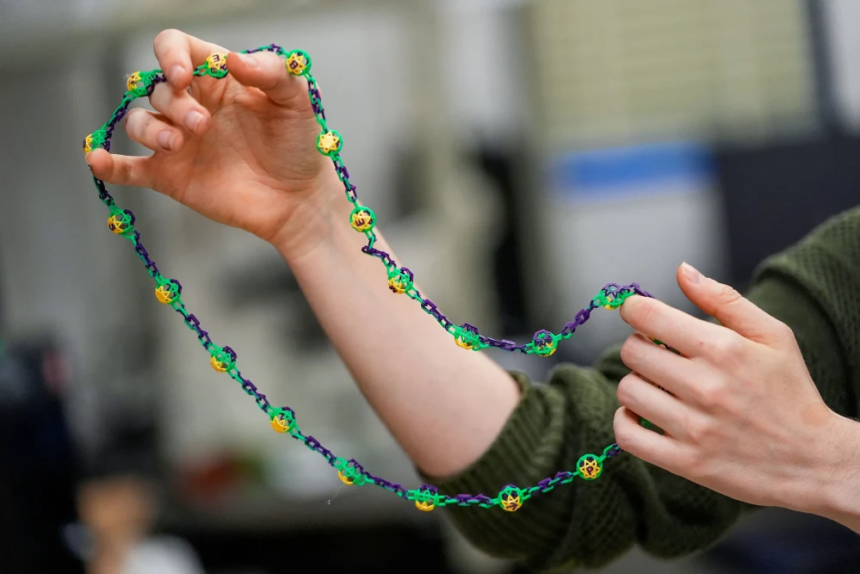
The LSU “PlantMe Beads” are 3D-printed from a starch-based material called polylactic acid (PLA) and contain okra seeds. When planted, the beads decompose naturally, aided by bacteria attracted to the seeds. These beads provide a safe alternative to plastic.
Kristi Trail, executive director of the Pontchartrain Conservancy, said plastic beads create two problems. First, they block storm drains and increase flooding. Second, beads that reach Lake Pontchartrain harm marine life. While the effects of biodegradable throws are still being studied, this approach fits a growing trend toward sustainable Mardi Gras celebrations.
From Algae to 3D Printing
Professor Naohiro Kato, a plant biologist at LSU, first explored biodegradable beads in 2013 due to concerns about environmental impact. In 2018, his team produced algae-based bioplastics, but costs were too high. Graduate student Alexis Strain then used 3D printing to create PlantMe Beads, now tested with three krewes during the 2026 Carnival season.
Some spectators were surprised to learn that the beads are not meant to be kept. “If you want to keep it, the petroleum-plastic bead is better,” Kato joked, highlighting their temporary and biodegradable design.
Redefining Mardi Gras Throws
LSU continues experimenting with faster-degrading materials that do not require planting. They are also partnering with local schools to teach students about bioplastics while making beads. Meanwhile, Freret aims to inspire more meaningful throws. In 2025, they started offering items spectators could value year-round, like branded baseball caps. Rhoades believes showing desirable, reusable items can influence other krewes to follow suit.
Ultimately, the goal is not only to replace plastic beads but also to reduce overall waste. Mardi Gras can stay festive while embracing sustainability.