
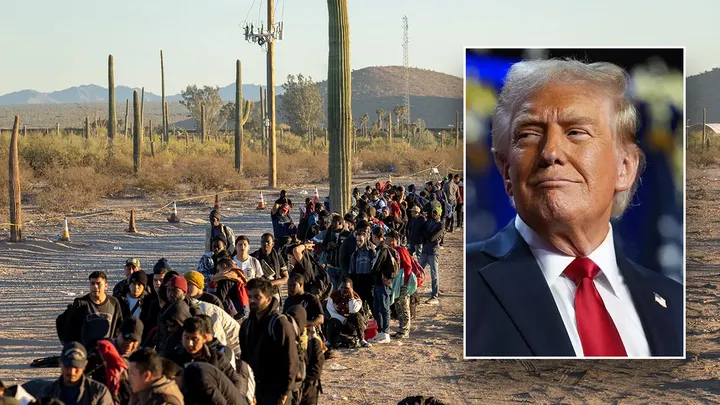
A sharp shift in border policy
Supporters of President Donald Trump argue that his administration dramatically reduced illegal crossings after years of record arrivals. They contrast his approach with that of former President Joe Biden, whose time in office saw millions of migrants released, paroled or allowed to remain in the country while awaiting hearings.
According to the Department of Homeland Security, more than two million people self deported and hundreds of thousands were formally deported during Trump’s first year back in office. While exact figures may face scrutiny, the overall drop in illegal entries has been significant.
Border encounters fall sharply
Data from Customs and Border Protection show a steep decline in unlawful crossings between official ports of entry. In December 2023, nearly 250,000 migrants crossed illegally. By December 2025, that number fell to just over 6,000.
In addition, officials report that for nine straight months, authorities released zero migrants caught crossing unlawfully. Federal law states that individuals who enter illegally must be detained, a requirement reinforced by the 1996 Illegal Immigration and Immigrant Responsibility Act signed by President Bill Clinton. That law followed recommendations from the bipartisan Jordan Commission, which called for clearer distinctions between legal and illegal immigration.
Debate over enforcement and language
Despite the drop in crossings, immigration enforcement remains politically charged. Critics on the left often use broader terms such as “migrants” and argue that enforcement measures harm families and communities. Minneapolis Mayor Jacob Frey, for example, has described undocumented residents as “neighbors,” reflecting a more inclusive view.
Activist groups also focus on due process concerns. However, a recent ruling by the United States Court of Appeals for the Fifth Circuit reaffirmed that individuals living in the country illegally can be detained, even after long periods of residence. Legal organizations including the American Civil Liberties Union have continued to challenge deportation policies in court.
Protests and political pressure
Immigration enforcement has sparked demonstrations in several major cities. In Minneapolis, activist groups have protested federal enforcement actions and pressured local businesses to take public stands. One campaign targeted the retailer Target, urging it to oppose Immigration and Customs Enforcement.
Some demonstrations have included calls to abolish ICE entirely. Critics argue that such efforts amount to ending enforcement of existing immigration law, while supporters say they are defending immigrant rights.
A larger political fight
The broader debate centers on whether strict enforcement should continue or whether pathways such as parole and mass release should return. Backers of tighter controls believe the surge in crossings during previous years strained public resources and weakened respect for immigration law. They argue that Congress should pass legislation to prevent a repeat of past border surges.
Opponents counter that humanitarian protections and legal challenges remain essential safeguards. As the country heads into another election cycle, immigration once again stands at the center of the national conversation.