
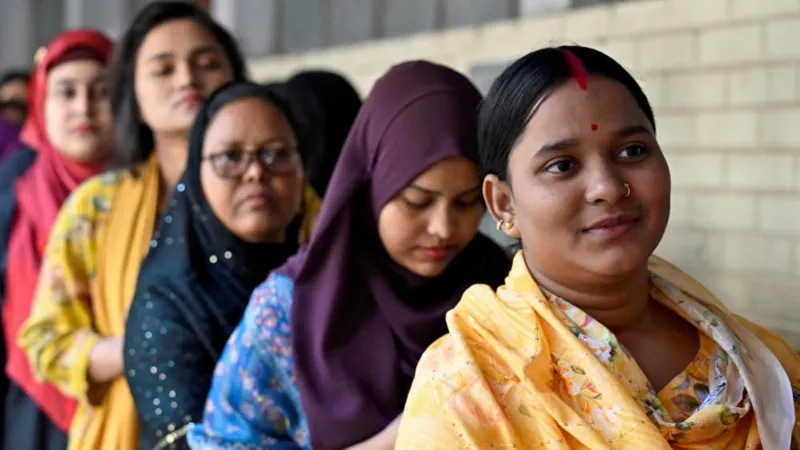
Bangladesh has completed voting in its first national election since massive student led protests forced former Prime Minister Sheikh Hasina from power in 2024. The country now waits for results that could reshape its political future.
More than 2,000 candidates competed for 350 parliamentary seats. However, none belonged to the Awami League, Hasina’s party, which authorities banned after the crackdown that led to her removal.
A Historic Vote After Political Turmoil
For the first time since 2008, the outcome of a Bangladeshi election remains uncertain. Previous elections faced heavy criticism, with opposition groups accusing the government of systematic rigging.
Protests erupted 18 months ago after security forces launched a violent crackdown on demonstrators. According to the United Nations, up to 1,400 protesters lost their lives. A court later convicted Hasina in absentia and sentenced her to death for ordering the crackdown. She currently lives in exile in India and denies all charges. She has also questioned the legitimacy of this election.
Despite the ban on the Awami League, many voters say they finally feel they have a real choice at the ballot box.
Main Political Rivals
The election primarily pits the center right Bangladesh Nationalist Party, led by Tarique Rahman, against an alliance headed by the Islamist Jamaat e Islami. The coalition also includes a party formed from the student protest movement.
Rahman, son of former Prime Minister Khaleda Zia, expressed confidence after casting his vote in Dhaka. He promised economic reform, democratic restoration, and national unity. He also criticized Jamaat for appealing to religious sentiment during the campaign.
Although Rahman appears to lead the race, Jamaat has built strong grassroots support. Its leader, Shafiqur Rahman, previously served time as a political prisoner. The party campaigned on justice and anti corruption themes. Unlike the BNP, Jamaat does not rely on political dynasties, which appeals to younger voters seeking change.
Youth Vote and Constitutional Referendum
More than 120 million citizens qualified to vote. Around 40 percent of them are under 37 years old. Young voters played a central role in last year’s protests, and many now view this election as a turning point.
Voters also decided on a proposed constitutional reform package. The interim government introduced these changes to fix what it calls a broken political system.
Interim leader and Nobel Peace Prize laureate Muhammad Yunus described the vote as the beginning of a “new dream” for the country.
By early afternoon, turnout had reached 49 percent. Authorities deployed nearly one million police officers and soldiers to maintain order across the country.
Concerns Over Representation
Women activists led much of the protest movement. However, female representation among candidates remains limited. Jamaat fielded more than 200 candidates, all men. The BNP nominated only 10 women out of more than 250 candidates. Among 30 candidates supported by the student led National Citizen Party, only two are women.
This imbalance has raised concerns among voters who expected broader representation after the uprising.
What Happens Next
Election results are expected on Friday. Many citizens hope this vote marks a genuine return to democratic governance after years of political repression.
The absence of the Awami League raises questions about how inclusive the process truly is. Still, uncertainty around the outcome signals a shift from the tightly controlled elections of the past.
Bangladesh now stands at a crossroads. The decisions made in this election could define its political direction for years to come.