
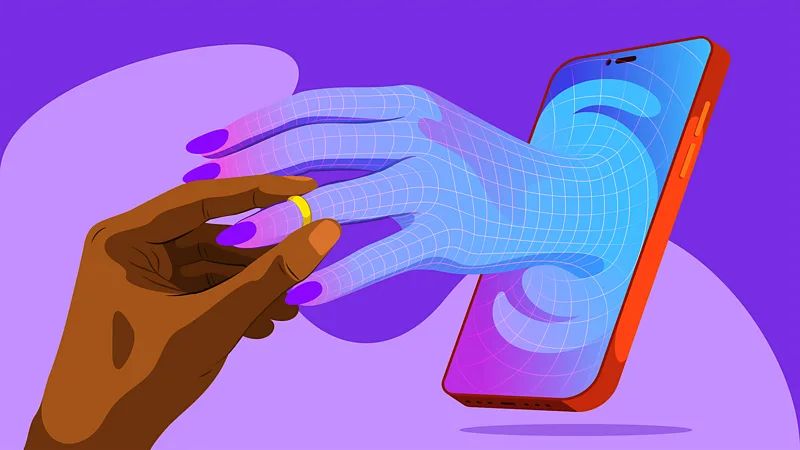
People Are Forming Real Bonds With AI
Artificial intelligence can now write a decent love poem in seconds. Some people are not just impressed by that, they are falling in love with it.
In Canada, a man recently proposed to an AI avatar named Saia. In the United States, a young woman using the name Ayrin shared that she had a romantic relationship with a chatbot called Leo. These stories are no longer rare. Millions of people use AI companion apps like Replika. A 2024 study found that around 40 percent of its users describe their connection with their chatbot as romantic.
But can a machine actually return those feelings?
AI Mimics Emotion, It Does Not Feel It
Experts say today’s AI systems do not experience love. They generate text using patterns learned from huge amounts of human writing. Their responses may sound caring and thoughtful, but they come from algorithms, not emotions.
Renwen Zhang, an assistant professor at the National Institute of Singapore, believes many chatbots are designed to appear human on purpose. She says this approach increases trust and keeps users engaged. That strategy can blur the line between real emotion and programmed replies.
Zhang studied more than 10,000 conversations between users and their AI companions. Her research shows that people often build deep emotional attachments. However, they are reminded they are talking to a machine when the chatbot glitches or freezes. That sudden break can cause real disappointment and even emotional pain.
She argues that AI companies should clearly state that chatbots do not have genuine emotions or personal experiences.
The Uncanny Valley Effect in Digital Romance
In further research, Zhang and her team found that users sometimes feel uneasy when a chatbot responds as if it were self aware during intimate conversations. This reaction is similar to the uncanny valley effect, where robots that look almost human can seem unsettling.
People may enjoy the attention and comfort AI provides. At the same time, they can feel confused or disturbed when the machine acts too human. That mix of comfort and discomfort makes AI relationships complex.
What Love Really Means
Love itself is difficult to define. People have explored it through poetry, music, and stories for centuries. These expressions help us understand powerful emotions that shape our lives.
AI can produce poems and even novels. It draws from vast collections of human created material. Still, creating words about love is not the same as feeling it.
Scientists have also studied the biology behind romantic love. In 1998, biological anthropologist Helen Fisher described love as three separate drives: lust, attraction, and attachment. Lust connects to sex hormones. Attraction and attachment link to chemicals in the brain.
Dopamine creates excitement and desire. Oxytocin helps build long term bonds. These chemicals shape how we connect with others.
Neil McArthur, a philosophy professor in Canada, explains that love has a strong chemical foundation. He says we feel it deeply in our bodies and brain chemistry.
Can Machines Ever Love?
Large language models can recognize emotional patterns and respond in ways that seem understanding. However, they do not have bodies, hormones, or lived experiences. They do not feel longing, joy, or heartbreak.
For now, AI can simulate affection, but it cannot experience love. Whether future technology could move closer to real emotional awareness remains an open question. At present, the love people feel for AI is real. The love from AI, however, is only code.