
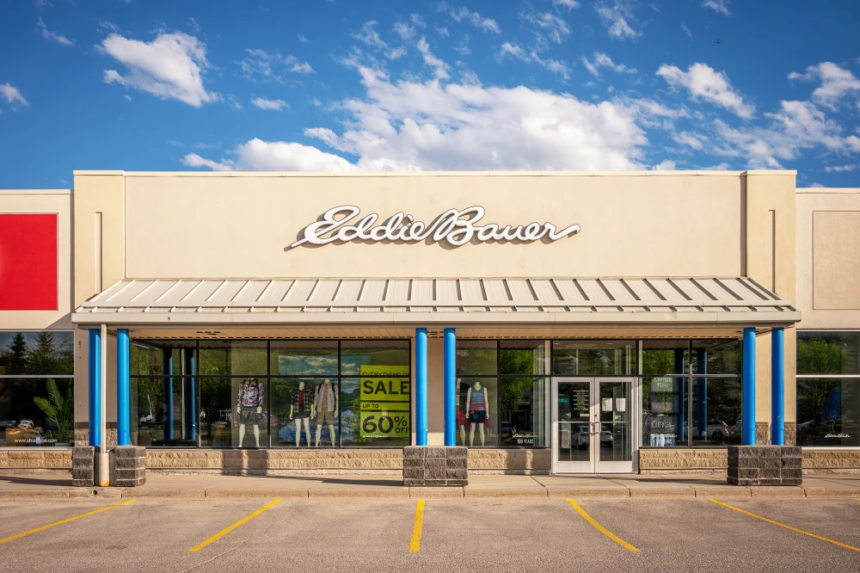
Catalyst Brands Seeks Chapter 11 Protection for U.S. and Canadian Stores
The company running roughly 180 Eddie Bauer locations across the U.S. and Canada has filed for Chapter 11 bankruptcy, citing declining sales and multiple industry challenges. This marks the third bankruptcy for the outdoor brand in just over 20 years.
Eddie Bauer LLC entered a restructuring agreement with secured lenders and filed in the U.S. Bankruptcy Court for the District of New Jersey. Most stores will remain open during the restructuring, though some locations may eventually close. The company will explore a court-supervised sale; if unsuccessful, it will begin winding down U.S. and Canadian operations.
“This is not an easy decision,” said Marc Rosen, CEO of Catalyst Brands, which operates Eddie Bauer in North America. “However, this restructuring optimizes value for stakeholders while keeping Catalyst profitable with strong liquidity and cash flow.”
Brand Ownership and Global Operations
Stores outside North America operate under separate licenses and are unaffected by the filing. Authentic Brands Group retains ownership of the Eddie Bauer intellectual property and may license it to other operators. Other Catalyst Brands operations will continue unaffected. E-commerce and wholesale operations, managed by Outdoor 5, LLC, are also not impacted.
Retail Headwinds and Industry Trends
Eddie Bauer joins a growing list of U.S. retailers restructuring or closing stores this year, including Saks Off 5th and Amazon Go locations. Rising competition, inflation, tariffs, and other costs have compounded challenges for traditional brick-and-mortar retailers.
“Even before Catalyst Brands was formed last year, Eddie Bauer was facing significant challenges,” Rosen said. “While improvements in product development and marketing were made, they couldn’t fully overcome years of operational issues.”
Eddie Bauer’s History and Legacy
Founded in 1920 in Seattle as Bauer’s Sports Shop, the company initially supplied outdoor enthusiasts and made jackets and sleeping bags for the military. It created the patented “Skyliner” goose-down jacket in 1936 and outfitted the first American to climb Mount Everest in 1963.
The brand shifted to casual apparel after founder Eddie Bauer retired in 1968. Over the decades, ownership passed through General Mills, Spiegel, Golden State Capital, and most recently, Authentic Brands and SPARC Group. Catalyst Brands formed in 2022 following a merger of SPARC and JCPenney.
Modern Challenges and Brand Perception
At its peak in 2001, Eddie Bauer operated nearly 600 stores. Analysts say the brand has struggled to compete with rivals like Fjallraven and Arc’teryx, while quality issues and an “old-fashioned” image have affected younger shoppers’ interest.
“While Eddie Bauer remains well-known, it hasn’t kept pace with competitors, which is critical for an outdoor brand,” noted Neil Saunders of GlobalData Retail.