
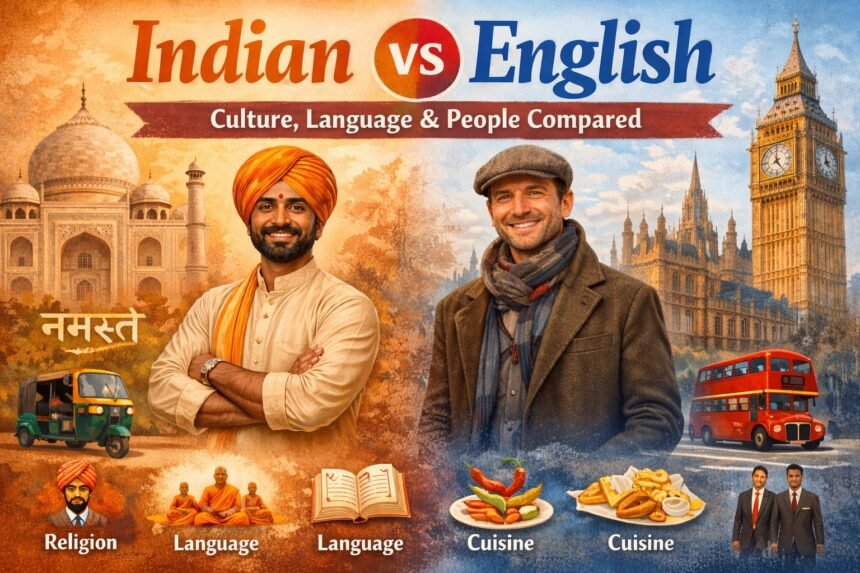
isIndia and England share a common history, but they are totally different today. India has traditions and a strong sense of community in their society. England is more independent and reserved. You can see and observe these differences clearly in their food, values, and daily habits of life.
Traditions and Culture
Indian culture has a rich and long history. Hinduism and Islam are influenc by one another, as are clothing and household members.
England’s monarchy, history and Christian tradition have all had an impact on its culture. In English culture, children are encouraged to be independent from a very young age.
Language and Communication
India has one of the largest linguistic diversity in the entire world. English is the official language and the business language in many educational and corporate environments.
English is the main language in England. Accents vary by region. London’s accent is different than that of Manchester, Liverpool or Manchester. British communication is polite and indirect. It often contains subtle humor.
Indian communication is often indirect. This can be the case when expressing respect or trying to avoid conflict. Tone and hierarchy are important factors in professional settings.
Human Behavior
Indians have a reputation for hospitality. Indians treat guests as extended family. Many families will take care of their friends like they are their own. The public life in India can be lively and expressive.
The conversation is generally measured and calm.
Indian office structures are usually hierarchical. The hierarchy of managers is clearly defined.
Beliefs and Religion
Indian culture and religion are interrelated. Many Indian households have daily rituals and prayers. Spirituality affects lifestyles and morals.
Christianity has had a significant influence on England’s culture. However, modern life is much more secular. There are many religious beliefs.
Food Culture
Indian food is a part of many family gatherings and festivals. English food is generally milder. The tea culture in England plays a large role.
The food habits of both countries reflect the differences in their climates, agriculture patterns, histories and agricultural practices as well.
Conclusion
Indian culture is based on tradition and family. The English are concerned more with privacy and individuality.
Education, respect and manners are important to cultures. The great histories of these cultures have shaped their social systems, languages, and institutions.Relationships between individuals and professionals become more solid.