Tehran and Washington Advance Talks Amid Tensions
Negotiators from the United States and Iran met in Geneva, moving closer to what Tehran called the start of a potential framework. Meanwhile, Iranian Foreign Minister Abbas Araghchi said the sides agreed on several guiding principles. They will now begin drafting text for a possible deal and exchange proposals before a third round of talks.
“Good progress occurred compared to the previous meeting,” Araghchi said. Although drafting will slow the process, “the path has started.”
U.S. Demands Complete Nuclear Dismantlement
However, the U.S. insists any deal must include full dismantling of Iran’s nuclear program. This includes ending enrichment, limiting ballistic missiles, and stopping support for groups like Hamas and Hezbollah. These demands go far beyond Iran’s proposal of temporary pauses or technical adjustments.
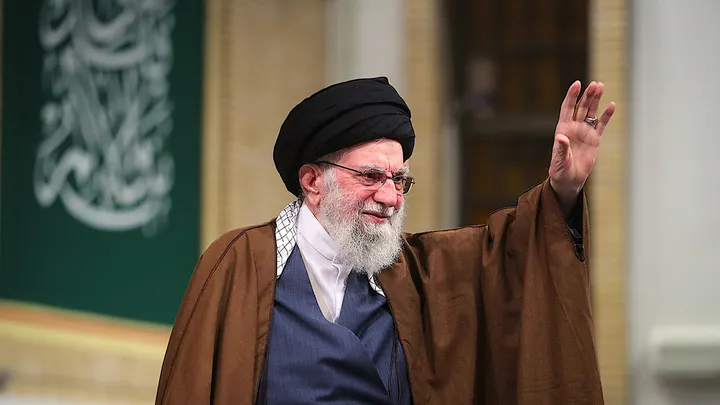
Iran Supreme Leader Ali Khamenei pushed back. He said on social media that negotiations cannot force Iran to abandon nuclear energy entirely. “If that’s the case, there is no room for negotiation,” he wrote, signaling Iran will not accept full dismantlement.
A U.S. official said, “Progress occurred, but many details remain unresolved.” Iran promised to return in two weeks with detailed proposals to address U.S. concerns.
U.S. Expands Military Presence
In addition, the U.S. has increased its military presence near Iran. The USS Abraham Lincoln operates in the Arabian Sea, where F-35 jets shot down an Iranian Shahed-139 drone. The USS Gerald R. Ford heads toward the region, and the USS George H.W. Bush may join, creating a rare three-carrier presence.
Furthermore, F-35A jets have deployed to RAF Lakenheath in the UK, ready to move to the Middle East. Satellite imagery shows F-15E and A-10 jets positioned in Jordan. Over 100 C-17 cargo planes delivered advanced air defense systems, including Patriot and THAAD batteries, to Qatar and Saudi Arabia.
Iranian Warnings and Strategic Moves
Despite that, Iran issued strong warnings. Khamenei stated the U.S. could be “struck so hard that it cannot get up again.” The Islamic Revolutionary Guard Corps Navy said it could close the Strait of Hormuz, which handles one-fifth of global oil flows.
Nonetheless, Iranian officials framed the Geneva talks as a step toward a potential agreement. Even so, the main conflict—whether Iran will dismantle or keep its nuclear capabilities—remains unresolved.