
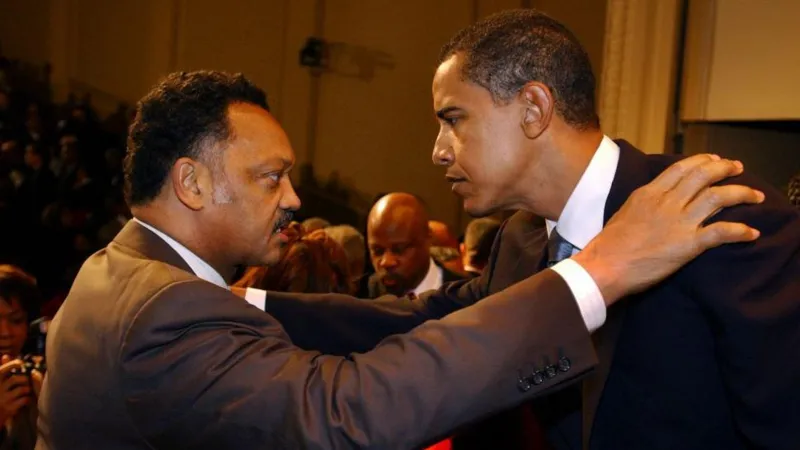
From Civil Rights Activist to Presidential Contender
Jesse Jackson emerged as one of the most influential figures of the American civil rights era. A close ally of Martin Luther King Jr., he moved from street activism into national politics at a time when few believed that shift was possible for a Black leader.
In the 1980s, Jackson became the first African American to mount serious campaigns for the Democratic presidential nomination. He ran in 1984 and again in 1988. While he did not win the nomination, he secured millions of votes and built a broad political coalition. His success at the ballot box showed that a Black candidate could compete at the highest level within a major party.
That breakthrough helped open doors for future leaders, including Barack Obama and Kamala Harris.
Building a Multiracial Political Coalition
Jackson’s campaigns focused on unity. He reached out to poor and working class Americans across racial and ethnic lines. At a time when many Democrats avoided bold language about inequality, Jackson spoke directly about poverty, discrimination, and economic justice.
His message centered on what he called a “Rainbow Coalition.” The idea was simple. Bring together African Americans, Latinos, labor unions, farmers, and other marginalized groups under one political movement. Years later, leaders like Bernie Sanders would praise that vision as ahead of its time.
Jackson’s speech at the 1988 Democratic National Convention became one of the defining moments of his career. He ended with the phrase “keep hope alive.” That call for hope echoed years later during Obama’s 2008 presidential campaign, which rallied voters around the message of hope and change.
Early Life Shaped by Segregation
Jackson was born Jesse Louis Burns on 8 October 1941 in Greenville, South Carolina. His mother, Helen Burns, was just 16 when she gave birth to him. She faced public shame and expulsion from her Baptist church because she was unmarried. His biological father, Noah Robinson, was married to another woman at the time.
When Jackson was two years old, his mother married Charles Jackson, who adopted him and gave him his surname. Jackson stayed connected to both men and later described them as important father figures in his life.
He grew up in the segregated South. Jim Crow laws forced Black Americans into separate schools, neighborhoods, and public spaces. Churches became centers of community life and political resistance. In that environment, Jackson developed both his faith and his commitment to justice.
Later Years and Personal Challenges
After his presidential bids, Jackson remained active in public life. He acted as a senior figure within the Democratic Party and often served as a mediator in political and social disputes.
However, controversy marked his later years. Reports of marital infidelity and financial misconduct involving his son, Jesse Jackson Jr, drew public criticism. In 2017, doctors diagnosed Jackson with Parkinson’s disease. They later revised the diagnosis to progressive supranuclear palsy, a rare brain disorder with similar symptoms. Following his diagnosis, he stepped back from public appearances.
A Lasting Political Legacy
Jesse Jackson transformed the role of Black leadership in American politics. He proved that national campaigns could reflect the country’s growing diversity. More importantly, he showed that a multiracial coalition could compete inside a major political party.
Without his groundwork in the 1980s, the historic election of Barack Obama in 2008 might have looked very different. Jackson did not win the presidency, but he changed the path to it.