
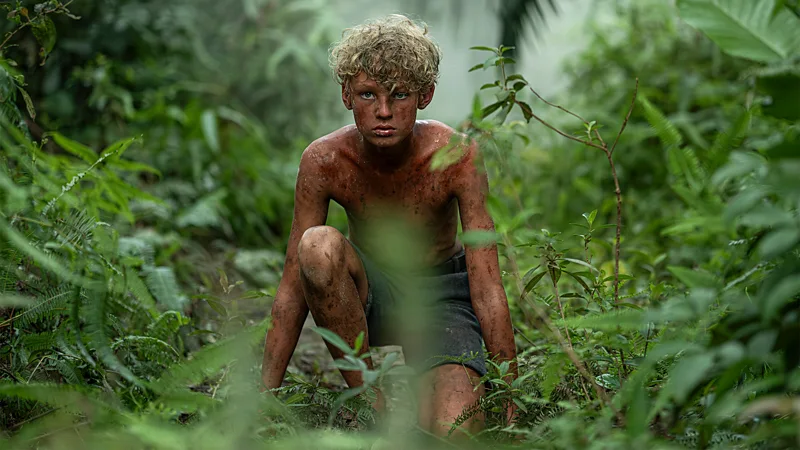
Jack Thorne returns to familiar ground with his new television adaptation of Lord of the Flies, but this time the scale feels bigger and the impact deeper. After the global success of Adolescence, which he co created with Stephen Graham, Thorne turns to a literary giant. He adapts Lord of the Flies by William Golding for a bold four part series that feels both faithful and refreshingly new.
A Classic Story, Told With New Urgency
The story remains the same at its core. A group of schoolboys survive a plane crash and find themselves stranded on a remote island. At first, they try to create order. Soon, fear and power struggles take over. Civilization slips away. Violence follows.
While the original novel works as a broad allegory about society and human nature, this adaptation sharpens its emotional focus. Thorne balances two layers carefully. On one level, the series plays as a tense survival thriller. On another, it becomes a chilling study of group psychology and moral collapse.
Unlike Adolescence, which centered on one troubled boy, this series explores collective behavior. It asks how ordinary children can drift toward brutality when authority disappears.
Strong Direction and Striking Visual Style
Director Marc Munden brings intensity to every frame. He uses unusual camera angles and close ups to create unease. Nature is not just background here. Insects crawl. Ants swarm. The island feels alive and indifferent.
The colors stand out. Bright reds and harsh greens give scenes a dreamlike, almost nightmarish feel. The music, composed by Cristobal Tapia de Veer, adds to the tension. The score rumbles beneath key moments, heightening dread without overpowering the story.
Each episode follows a different character’s point of view. This structure builds intimacy. It helps viewers understand how fear spreads and how loyalties shift.
Deeper Character Focus Without Losing the Core Message
Thorne adds small glimpses into the boys’ lives before the crash. These flashbacks provide context, especially for Jack and others. Still, the real strength of the story lies in its archetypes.
Ralph stands out as the elected leader. He tries to act responsibly. Yet he also mocks Piggy to gain approval. That flaw makes him human. It also shows how easily decency bends under pressure.
Although the series centers on children, it is not meant only for young viewers. It raises hard questions about power, conformity, and morality. Families who watch together will likely leave with strong opinions and difficult conversations.
Final Verdict
This adaptation of Lord of the Flies succeeds because it respects the novel’s core themes while giving them fresh energy. It feels unsettling, thoughtful, and visually bold. Jack Thorne proves once again that stories about youth can expose uncomfortable truths about society as a whole.
Rating: ★★★★☆