
Warm Words in Munich, But Central Europe Gets Special Attention
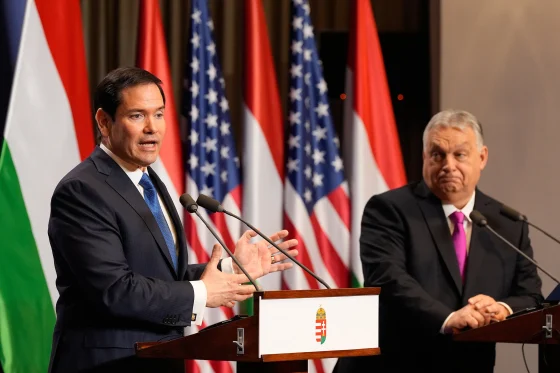
U.S. Secretary of State Marco Rubio received a standing ovation at the Munich Security Conference, yet his subsequent visits to Central Europe revealed where the U.S. now feels most aligned. Rubio described a “golden age” in relations—not with Germany or France, but with Hungary, where he met nationalist leader Viktor Orbán.
A day earlier, Rubio met Slovak Prime Minister Robert Fico, another populist who opposes strong support for Ukraine and aligns with the MAGA agenda. This swing through Trump-friendly European capitals followed his warmer tone in Munich after months of tension with traditional U.S. allies.
“We belong together,” Rubio said in Munich, addressing European leaders still wary after disputes over Greenland and perceived unreliability from Washington. “For us Americans, our home may be in the Western Hemisphere, but we will always be a child of Europe.”
Experts Note Subtle Policy Signals
Analysts argue Rubio’s speech balanced reassurance with clear warnings. Bronwen Maddox of Chatham House noted the message contrasted last year’s critique of European values by Vice President JD Vance. “It was sugar-coated, but it signaled that the U.S. would act independently if Europe did not align with American interests,” she wrote.
German Chancellor Friedrich Merz warned of a “deep divide” between Europe and the U.S., while Danish Prime Minister Mette Frederiksen doubted that Washington had abandoned Greenland ambitions. Senator Mark Kelly of Arizona cautioned that celebration in Munich may have pleased Beijing and Moscow more than Europe.
Focus on Pro-Trump Central European Leaders
Rubio’s visits to Fico in Slovakia and Orbán in Hungary underscored the Trump administration’s preferred allies. Hungary and Slovakia share populist, euroskeptic stances, and the U.S. engagement with these leaders is seen as reinforcement of their political alignment. Rubio and Orbán also announced a civil nuclear cooperation agreement.
H.A. Hellyer of the Royal United Services Institute noted that Rubio’s European itinerary sent a clear signal: “Reassurance to Western Europe in Munich, followed by outreach to Central European governments aligned with MAGA foreign-policy thinking.”
Rubio framed the U.S. vision as one of pride, sovereignty, and a link to Christian heritage. He criticized mass migration and called on Europeans to control borders while emphasizing a preference for partnership—but willingness to act alone if needed.
Though speaking to officials from long-time allies like France, Germany, and Britain, Rubio’s subsequent praise of Orbán and alignment with euroskeptic leaders highlighted the administration’s focus on ideological alignment over traditional alliances.