Panels Removed Under Trump Administration
Black activists who won a fight to place slavery memorial panels at Philadelphia’s President’s House in 2002 are now challenging their removal. Last month, the National Park Service took down 13 panels. They cited a March 2025 executive order by President Donald Trump that bans federal exhibits based on race. These panels told the story of nine men, women, and children enslaved by George Washington at the site. In total, the memorial was part of 34 historical displays.
Attorney Michael Coard recalled the original struggle: “We battled for eight solid years to open the first slavery memorial of its kind on federal property. My motivation was anger, rage, and outrage.”
How the Movement Started
The effort began in 2002 when Philadelphia announced plans to move the Liberty Bell to the site of Washington’s executive residence. Coard, who hosted a radio show on WHAT, highlighted that the relocation ignored the enslaved people who lived there. In response, his group, the Avenging The Ancestors Coalition, protested and raised funds. As a result, they helped pay for the memorial panels.
The group anticipated challenges after Trump returned to office. Then, the panels were removed on January 22, 2026. Coard explained, “The common theme of the 13 panels was to show the horrors of slavery. Not just the loss of freedom, but the beatings, whippings, and sexual abuse.”
Administration Statement
Meanwhile, the Interior Department said all federal agencies must review interpretive materials to ensure accuracy and alignment with shared national values. In addition, White House spokesman Davis Ingle stated the administration wants “to honor the fullness of the American story instead of distorting it in the name of left-wing ideology.”
Public Response
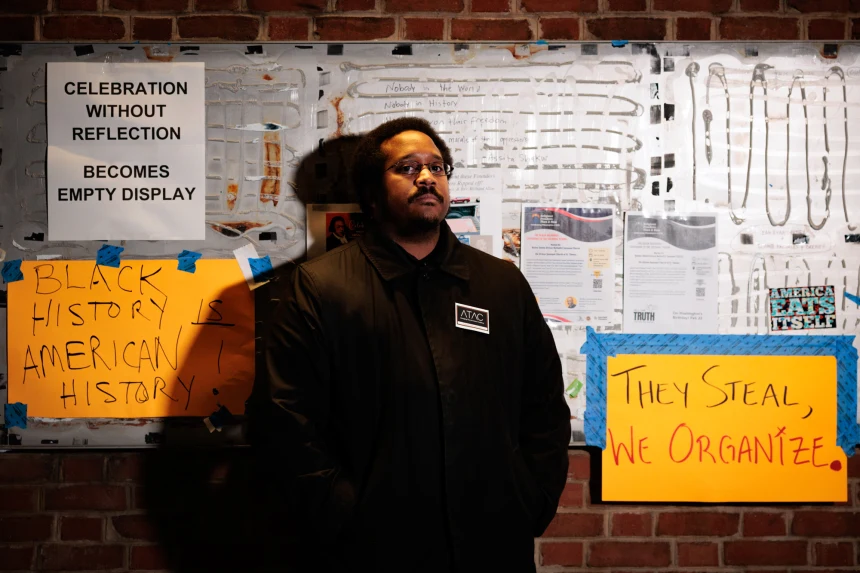
Last week, over 200 activists and residents protested the removal. People of different political views and backgrounds joined the rally. For example, Gerry James traveled from Kentucky and said, “It’s a lot of support for preserving Black history and recognizing it as American history.”
Mijuel Johnson, a steering committee member of the coalition, emphasized the importance of the panels. “These panels are not just panels. They serve as a national memorial to enslaved people. Being one of the first of its kind on federal property makes it historically significant.”
Legal Action and Future Goals
Coard’s group, joined by University of Pennsylvania law professor Cara McClellan and the NAACP Legal Defense Fund, filed a lawsuit with the city. They demand the panels be restored, the memorial site enhanced, and the memorial replicated elsewhere. “We want the 34 interpretive panels back,” Coard said. “In addition, we want to expand the site and replicate it wherever Black people were enslaved on federal property.”
Despite the setback, activists remain determined. “We are passionate about this,” Coard said. “As a result, we’re going to win this fight.”