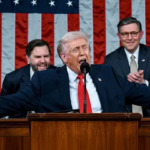
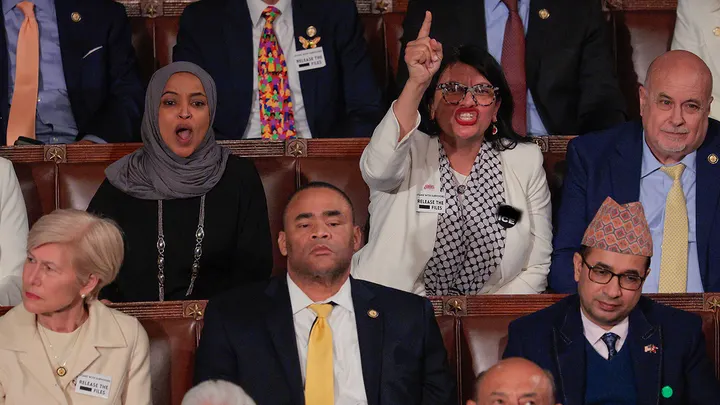
Rep. Rashida Tlaib drew attention during President Donald Trump’s State of the Union address after wearing a round pin that read “F— ICE,” a clear reference to U.S. Immigration and Customs Enforcement.
She also displayed another message that said, “Stand With Survivors Release the Files,” which appeared to reference documents tied to the late Jeffrey Epstein. Several other lawmakers in the chamber wore the same message during the speech.
Protest on the House Floor
Tlaib sat beside Rep. Ilhan Omar, her colleague in the progressive group often called “the Squad.” During the address, both lawmakers voiced objections from their seats. Reports later indicated that they left the chamber before the speech concluded.
Their visible protest came as Trump focused heavily on immigration enforcement and border policy, key themes of his administration.
White House Response
The White House responded the following day. Spokeswoman Abigail Jackson defended ICE officers and criticized what she described as attacks from Democratic officials.
She stated that assaults on ICE agents have surged sharply. According to her, officers face growing risks while carrying out enforcement duties. Jackson argued that local leaders should support federal immigration agents rather than undermine them.
The administration continues to push strict immigration policies. Trump has repeatedly called for stronger border controls and tougher enforcement measures.
Tlaib’s Position on ICE
Tlaib has openly called for eliminating ICE in the past. Earlier this month, she described the agency as unaccountable and harmful to communities. She accused ICE of violating rights and ignoring legal limits during operations.
Her criticism reflects a broader divide in Congress over immigration policy. While the Trump administration frames enforcement as necessary for public safety, progressive lawmakers argue that current practices cause harm and require major reform.
The moment added another flashpoint to an already tense State of the Union address. Immigration once again stood at the center of the political debate, with lawmakers sharply split over the role and future of ICE.