
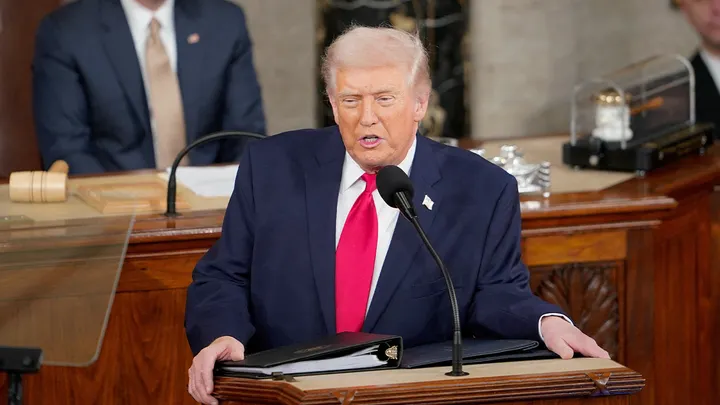
A Democratic senator is pressing President Donald Trump to return billions of dollars collected under tariffs that the Supreme Court recently ruled unlawful.
Gallego Calls for Immediate Refund Plan
Ruben Gallego sent a letter to Donald Trump urging the administration to refund families and small businesses affected by the now invalid tariffs. His request follows a 6 to 3 ruling by the Supreme Court of the United States that found the president lacked authority under the International Emergency Economic Powers Act to impose the sweeping duties.
Gallego argued that the decision creates an opportunity to return money to Americans instead of keeping what he described as unlawfully collected funds. He warned that without swift action, more than 100 billion dollars could remain in federal accounts or corporate hands rather than reaching households and small firms.
Congress Debates the Next Move
Meanwhile, lawmakers are divided on how to respond. Some Republicans want to use the budget reconciliation process to approve new tariffs in line with the court’s guidance. Others believe the president can move forward without new legislation.
At the same time, Trump reinstated a 10 percent tariff for 150 days. That step will require Congress to weigh in if it wants the duties to continue beyond that period.
Several Democrats support separate legislation led by Ron Wyden that would refund all collected tariff revenue with interest. Twenty five Senate Democrats back the proposal.
Revenue Totals and Corporate Concerns
Since October, the administration’s tariff program has generated about 155 billion dollars, according to Treasury Department data. Gallego asked the White House to confirm how much it has collected as of February 20 and to explain whether it plans to issue refunds.
He also requested details about who would qualify for repayment and whether corporations must disclose tariff related price increases passed on to consumers.
In his letter, Gallego warned that large companies could benefit from the uncertainty. He said corporations with strong legal and lobbying teams may secure favorable outcomes, while ordinary Americans could struggle to recover losses.
He set a March 4 deadline for answers from the administration.
The dispute now places additional pressure on the White House as it weighs its next legal and legislative steps following the high court’s decision.