MIT and IBM are expanding research links that connect advanced computer science theory with real world technology.
Their joint research work gives researchers a path from academic ideas to practical systems.
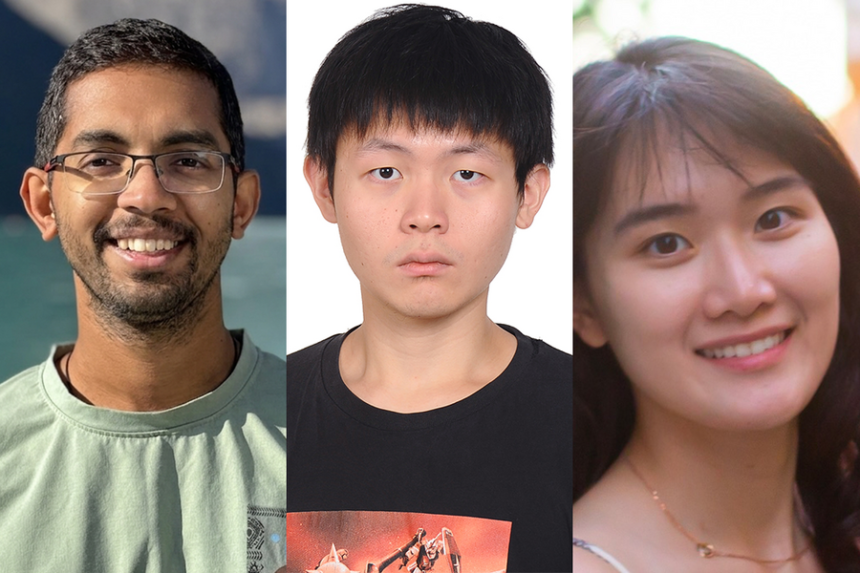
Three researchers, Srinivasan Arunachalam, Zhang Wei Hong PhD ’25, and Irene Ko PhD ’24, show how this model can support work in quantum machine learning, reinforcement learning, and trustworthy AI.
Quick Fact
| Quick Fact | Details |
|---|---|
| Researcher | Zhang Wei Hong |
| Research Area | Reinforcement learning and AI agents |
| Academic Background | PhD at MIT |
| Key Research | AI exploration, value function learning, and reward signals |
| Applications | Robotics, large language models, and AI for science |
| Current Role | Research staff member at IBM |
| Current Focus | AI agents, test time training, and enterprise AI infrastructure |
Hong Advances AI Agent Research
The MIT IBM Computing Research Lab has helped researchers turn theoretical ideas into practical technology. The lab, formerly known as the MIT IBM Watson AI Lab, brings MIT and IBM researchers together.
Zhang Wei Hong worked on reinforcement learning during his PhD at MIT. His research focused on improving how AI agents learn from environments.
Hong studied Atari games, including Montezuma’s Revenge. He explored ways to improve value function learning and reward signals. His work later expanded into robotics, large language models, and reinforcement learning for science.
Hong is also working on infrastructure for enterprise AI agents. These systems can support tasks such as reading charts and calling database tools.
Trustworthy AI Research Gains Practical Focus
Irene Ko followed a different research path. Her work focuses on trustworthy, safe, accurate, and fair artificial intelligence.
During her PhD, Ko worked with MIT and IBM researchers from the beginning. Her research examined neural networks and later expanded to foundation models and large language models.
Ko joined IBM Research as a research scientist after completing her PhD in 2024. She continues to study trustworthy AI and ways to bring these methods into real AI systems.
These signals can help researchers examine model behavior. They can also support analysis of issues such as prompt injection and hallucinations.
Quantum Computing Research Moves Toward Real Systems
Srinivasan Arunachalam focuses on quantum computing and learning theory. He joined MIT as a postdoctoral researcher in 2018.
His work explored algorithms and quantum circuits that could offer advantages over classical computing. Discussions with MIT professor Isaac Chuang led to collaboration with the MIT IBM research team and IBM researcher Kristan Temme.
Arunachalam later moved closer to problems that could work on near term quantum devices. His research considered practical limits such as noise, hardware architecture, and measurement methods.
Researchers Bridge Theory and Practice
The three researchers work in different areas, but their research follows a similar path.
Hong focuses on reinforcement learning and AI agents. Ko studies trustworthy AI and model deployment. Arunachalam explores quantum computing and learning theory.
Their work shows how academic research can address practical technology problems. The MIT IBM collaboration has also helped connect researchers with industry teams and real system requirements.
AI and Quantum Research Advances
Their ongoing work could contribute to future AI and quantum computing systems as researchers continue to connect theory with practical applications.
The MIT IBM Computing Research Lab has supported research across AI and quantum computing. Its collaboration model has helped researchers move from academic questions toward practical systems.
Hong, Ko, and Arunachalam now continue that work at IBM. Their research highlights the growing connection between computer science theory, AI development, and quantum technology.