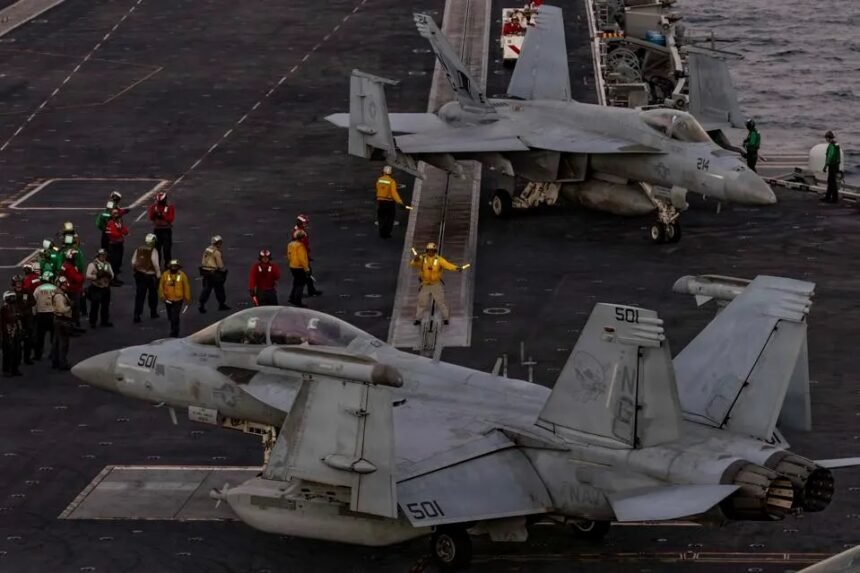
The United States has expanded its military presence in the Middle East amid growing tensions with Iran. The deployment includes aircraft carriers, fighter jets, naval vessels and air defense systems.
The military buildup began in January 2026. It marked a major change in the US military presence in the region. The developments also coincided with rising tensions over Iran’s nuclear programme and regional security.
| Quick Facts: US Military Deployment | Details |
|---|---|
| What | The US expanded its military presence in the Middle East. |
| Where | Middle East and surrounding waters. |
| When | January to April 2026. |
| Key forces | Aircraft carriers, fighter jets, naval vessels and support aircraft. |
| Countries involved | United States, Iran and Israel. |
| Why | Rising tensions over Iran's nuclear programme and regional security. |
| Latest development | The US and Israel launched strikes against Iran on February 28, 2026. |
US Military Expands Its Presence in the Middle East
In January 2026, the US began deploying more armed soldiers to the Middle East. The deployment comprised naval soldiers, fighter jets, and other military equipment.
On January 26, the USS Abraham Lincoln arrived in the area. Its carrier strike group provided fighter planes, guided missile destroyers, and support aircraft.
The US also sent out F-22 Raptor and F-15E Strike Eagle combat planes. These planes joined other military assets stationed on regional sites.
Aircraft Carriers and Fighter Jets Join the Deployment
The US Navy increased its presence with new aircraft carriers. The USS Gerald R. Ford will join the USS Abraham Lincoln in the region in February 2026.
Both ships provide assistance for sophisticated fighter aircraft and military activities. Their deployment provided a considerable amount of American naval force to the Middle East.
Meanwhile, the United States Air Force sent more fighter fighters and refueling aircraft. These aircraft aided the overall military expansion.
In March, the USS George H. W. Bush carrier strike group began its deployment. On April 23, it entered the United States Central Command’s sphere of responsibility.
Relations between the United States and Iran worsened due to disagreements over Iran’s nuclear program and internal turmoil.
Protests erupted in Iran in late December 2025. Demonstrations began following economic hardships and a dramatic drop in the country’s currency.
The Iranian authorities responded with a crackdown. Human rights organizations recorded deaths among protestors and expressed alarm over the use of force.
The scenario exacerbated existing relations between Washington and Tehran. In January 2026, the United States began to strengthen its military presence in the region.
Military Operations and Regional Security
Military tensions continued to grow in February 2026. US and Iranian troops reported a number of incidents involving naval vessels and aircraft.
On February 3, the US Central Command reported a contact between an Iranian drone and the USS Abraham Lincoln. A US fighter jet downed the drone over the Arabian Sea.
The US also reported an incident with an oil ship in the Strait of Hormuz. The US Navy escorted the vessel after Iranian soldiers attempted to intercept it, according to the US military.
On February 28, the United States and Israel initiated attacks on Iran, signaling the beginning.
US Military Buildup in Middle East
The supplied information does not establish a confirmed schedule for further deployments or withdrawals.
The United States significantly expanded its military presence in the Middle East during early 2026. The deployment involved aircraft carriers, fighter jets and naval support vessels.
The buildup coincided with rising tensions involving Iran and preceded the US and Israeli strikes on February 28. Further developments will depend on military and diplomatic decisions.