After two years of record numbers of cases and fatalities, the United States has lost its designation as having eradicated the highly contagious measles virus after 26 years.
The United Nations’ specialized agency, the Pan American Health Organization (PAHO), concluded that the same strain has been continuously spread throughout the United States.
Ten measles-related deaths have been recorded by states this year, the highest number the US has seen since the 1990s.
The director of PAHO, Dr. Jarbas Barbosa, declared that Bolivia and Mexico had likewise lost their status as measles-free countries, blaming the region’s ongoing “gaps in vaccination” for the disease’s comeback.
Quick Facts
| Category | Details |
|---|---|
| Main Development | United States loses measles elimination status |
| Duration | 26 years |
| Location | United States |
| Reported Cases | 5,412 measles cases in 2026 |
| Reported Deaths | 10 state reported deaths |
| Vaccination Rate | 92.4% among kindergarteners |
| Main Concern | Declining vaccination coverage and continued measles transmission |
| Health Organisation | Pan American Health Organization (PAHO) |
At a press conference on Tuesday, Barbosa stated, “These numbers are a serious warning for our region.”
He continued by saying that Canada has made progress this year to stop the spread of measles, despite losing its position as an elimination last year due to multiple significant outbreaks.
The US and other countries who lost eradication status would have to submit corrective action plans detailing how they would try to increase vaccination rates, according to Daniel Salas, PAHO’s executive manager of immunizations, on Tuesday.
US Measles Elimination Status Faces Setback
The US losing its elimination status, according to Nuwan Gunawardhana, an assistant professor of medicine at Columbia University Irving Medical Center, was “a huge leap backwards”.
A request for response from the US Department of Health and Human Services (HHS) was not answered.
Before a vaccination was developed, the measles virus, which causes a characteristic blotchy red rash, infected millions of youngsters annually. In addition to long-term effects like encephalitis and immunological amnesia, which resets the immune system and limits its capacity to respond to future infections, the highly contagious virus can be lethal.
Falling Vaccination Rates Threaten Measles Protection
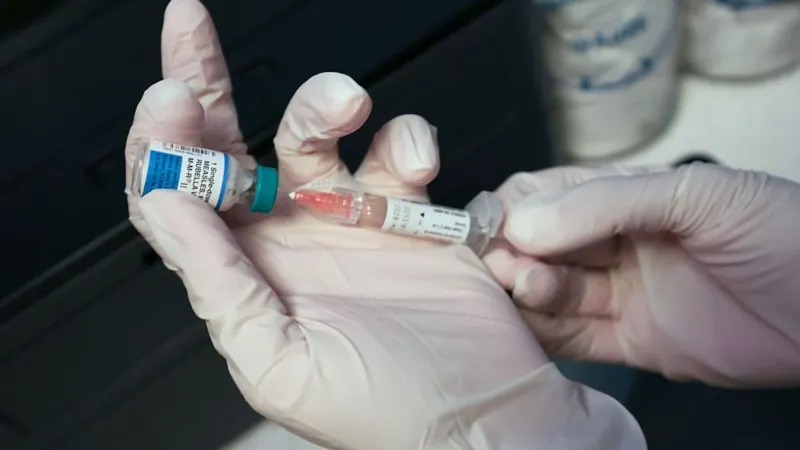
According to Dr. Gunawardhana, public health officials and medical professionals had to work extremely hard to gain patients’ trust in order to boost the MMR vaccine’s adoption, which resulted in decades in the US with few infections and fatalities.
However, following the Covid-19 pandemic, when people were presented with false information on the safety of vaccines and lost even more faith in public health services, that trust has been gradually eroding, according to Dr. Gunawardhana.
In the US, the MMR vaccination rate has dropped to 92.4%, which is lower than the 95% threshold that offers herd immunity, which prevents and restricts the spread of measles.
US Measles Cases Surge Amid Vaccine Policy Changes
This year alone, the nation has seen 5,400 cases of measles, the highest number since 1991.
According to state officials, an outbreak in Pennsylvania has killed seven individuals and infected nearly 1,400 people, which is probably a huge underestimate.
The US Centers for Disease Control and Prevention (CDC) has declined to include some of the deaths in its database for the time being, and US Health Secretary Robert F. Kennedy Jr. has been at odds with Pennsylvania officials about how it is tracking the measles deaths.
Kennedy has made several attempts to drastically alter US vaccination guidelines and regulations.
Political Disputes Add to US Vaccine Confusion
Kennedy has maintained that neighboring nations have also experienced an increase in measles cases, and that the increase in cases began prior to his taking over as head of HHS.
This year, President Donald Trump has raised concerns about the safety of the MMR vaccine by issuing an executive order dividing the injection into three distinct immunizations for measles, mumps, and rubella. According to public health experts, this step is expensive and could create misunderstanding about a vaccine that is already safe.
Due to the federal government’s vaccine maneuvers, states and public health experts are left to fill in the gaps by providing their own recommendations that preserve decades-old norms.