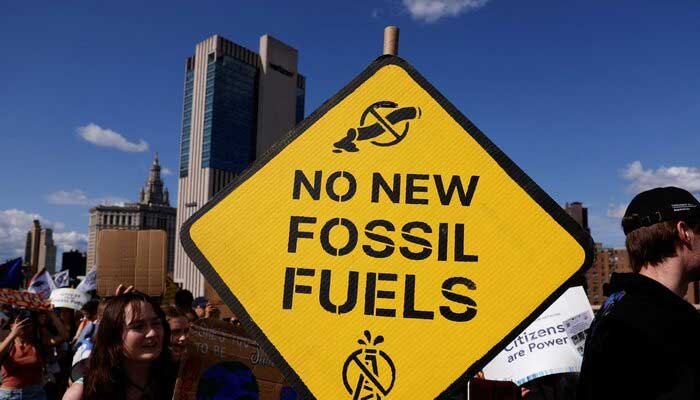
PARIS — A new report warns that global fossil fuel emissions will hit an all-time high in 2025, pushing the planet further away from the Paris Agreement’s 1.5°C warming limit.
According to the Global Carbon Budget 2025 report, emissions from oil, gas, and coal are projected to rise by 1.1% next year, reaching a record 38.1 billion tonnes of CO₂. Despite the rapid growth of renewable energy worldwide, it still isn’t enough to meet the world’s surging energy demand.
The study, released during the COP30 climate summit in Belem, Brazil, highlights that humanity now has only around 170 billion tonnes of CO₂ left to emit before exceeding the 1.5°C limit — equal to roughly four years of emissions at current rates.
“This means staying below 1.5°C is essentially impossible,” said Pierre Friedlingstein of Exeter University, who led the research.
The ongoing rise in carbon pollution has cast a shadow over COP30, notably taking place without the participation of the United States, the world’s second-largest emitter.
Experts warn that 2025 could become one of the hottest years ever recorded, yet global climate action remains insufficient.
“Collectively, the world is failing to deliver,” said Glen Peters from the CICERO Centre for International Climate Research. “Every nation must contribute more — urgently.”
While China’s emissions appear to be stabilizing — mainly from coal — researchers say it’s too early to confirm a peak due to policy uncertainty. In contrast, US coal emissions surged 7.5%, as higher gas prices forced a switch back to coal for electricity generation. The EU also saw a rise in emissions, partly due to colder winter months increasing heating demand.
India, on the other hand, reported a smaller CO₂ increase thanks to early monsoons and strong growth in renewable energy.
Despite these challenges, the study offers a glimmer of hope: 35 countries have successfully reduced emissions while growing their economies — double the number from a decade ago.
In total, global CO₂ emissions, including those from land use and deforestation, are expected to reach 42.2 billion tonnes in 2025. A decline in deforestation and wildfires in South America, helped by the fading El Niño weather pattern, has slightly reduced land-related emissions.
#ClimateCrisis #GlobalWarming #COP30 #CarbonEmissions #RenewableEnergy #ParisAgreement #ClimateChange #FossilFuels #Sustainability #NetZero