Ukraine is pushing for President Volodymyr Zelensky to meet U.S. President Donald Trump in the United States this month, as efforts to negotiate an end to the war with Russia continue to gain momentum. Ukraine’s National Security Chief Rustem Umerov said his team hopes to arrange Zelensky’s visit “at the earliest suitable date,” noting that both sides have reached “a common understanding” on key elements of the peace framework discussed earlier in Geneva.
While the White House has not commented on the potential Trump–Zelensky meeting, a U.S. official privately told the BBC that Ukraine has already “agreed to the peace deal,” with only minor issues left to finalize.
Peace Plan Faces Sharp Divisions
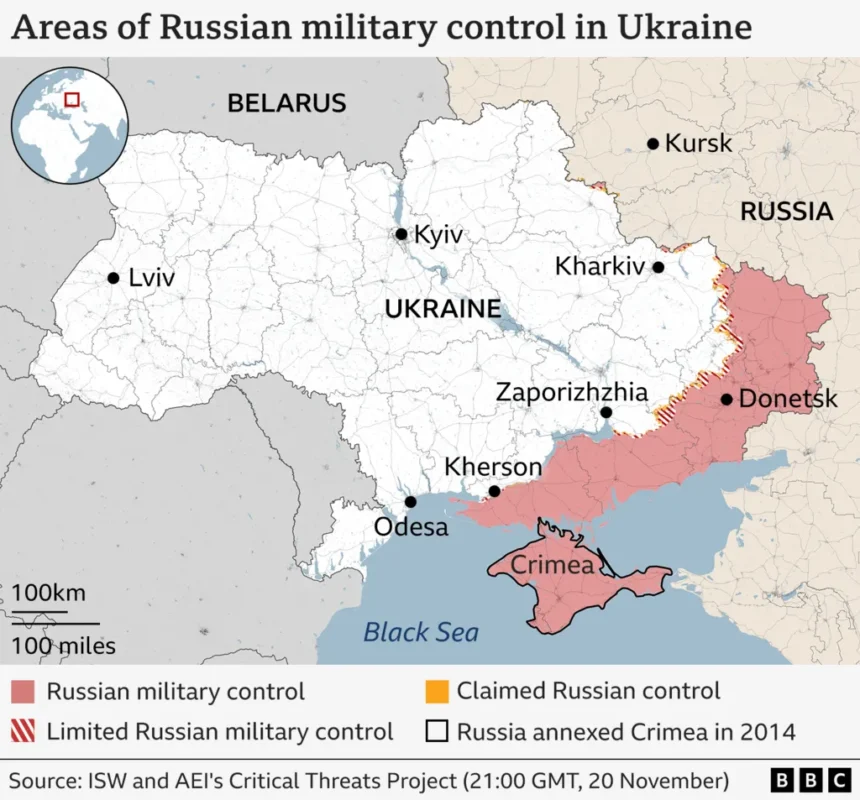
Despite progress between Washington and Kyiv, major disagreements remain between Ukraine and Russia. The Kremlin has dismissed Western-backed amendments—proposed by the UK, France, and Germany—that remove recognition of Russian-held territory, allow Ukraine to maintain a larger army, and keep the option of NATO membership open.
Zelensky welcomed the revised proposals, saying they make ending the war more achievable. However, Russian officials called the changes “unconstructive,” insisting any agreement should reflect the spirit of earlier Trump–Putin talks in Alaska.
U.S. negotiators are preparing to meet Russian representatives in Abu Dhabi to continue discussions, although Russian Foreign Minister Sergei Lavrov said Moscow has not yet received the updated draft plan.
Europe Steps Up Diplomatic Efforts
European allies are also staying involved. UK Prime Minister Keir Starmer confirmed a virtual “coalition of the willing” meeting to address recent developments. Zelensky described his conversation with Starmer as “good and very productive.”
Heavy Overnight Strikes Rock Ukraine and Russia
As diplomacy moves forward, fighting on the ground remains intense. Overnight, Russia launched major air attacks across Ukraine, killing at least six people in Kyiv. Multiple high-rise buildings caught fire, forcing mass evacuations. According to Ukraine’s military, more than 22 missiles and 460 drones were launched during the assault, targeting both residential areas and critical energy infrastructure.
NATO scrambled fighter jets over Romania for the third time in four days to intercept drones near the border, while Moldova also detected incoming Russian drones.
Russia reported its own casualties, claiming 249 Ukrainian drones had been intercepted overnight. Officials in the Rostov region confirmed three deaths and several injuries, with Taganrog among the hardest hit. Krasnodar’s governor described Ukraine’s strikes as “one of the most massive and sustained attacks” of the conflict.
Growing International Pressure for a Lasting Peace
The original peace plan drafted by U.S. and Russian officials drew strong criticism from Ukraine and European nations, who argued it was overly favorable to Moscow. The Trump administration denied bias, insisting it is engaging both sides fairly.
EU foreign policy chief Kaja Kallas emphasized that any final peace agreement must prevent future Russian aggression. She also said Russia should “definitely not” return to the G8, stressing that the world cannot return to “business as usual.”
More than two years into the conflict, tens of thousands of soldiers and civilians have died, while millions of Ukrainians have been displaced. With talks intensifying, global leaders are watching closely to see whether the latest diplomatic push will bring meaningful progress.
#UkraineWar #TrumpZelensky #RussiaUkraineConflict #PeaceTalks #KyivStrikes #InternationalDiplomacy #EuropeNews #USPolitics #UkraineUpdate #GlobalAffairs #BreakingNews #RussiaStrikes #NATO #WorldNews