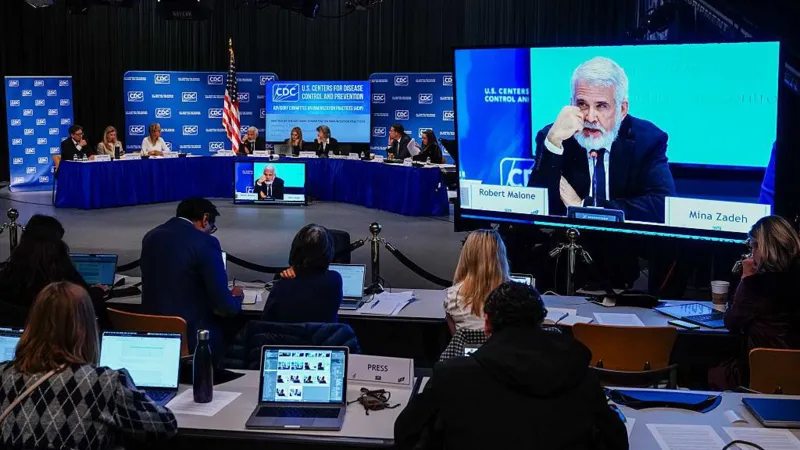
A U.S. vaccine advisory panel has voted to end the long-standing recommendation for automatic hepatitis B vaccinations at birth. Instead, the Advisory Committee on Immunization Practices (ACIP) now supports an “individual-based decision” for babies born to mothers who test negative for the virus.
The vote was 8–3, marking one of the most significant changes to U.S. vaccine guidelines in decades.
A Major Shift Under a New Committee
The decision comes after Health Secretary Robert F. Kennedy Jr., who has a history of vaccine skepticism, removed all previous ACIP members in June and replaced them with advisers who are more critical of vaccines.
Since 1991, the U.S. has recommended hepatitis B shots for newborns. Research shows this policy has prevented around 90,000 deaths over the past three decades. ACIP normally guides the CDC on vaccine schedules, and the CDC’s acting director must now decide whether to formally approve the change.
What the New Guidance Says
Under the updated recommendation:
- Babies born to mothers positive for hepatitis B should still receive the vaccine at birth.
- Babies whose mothers test negative should get their first dose no earlier than two months old.
Several ACIP members strongly opposed this delay, saying it could put infants at unnecessary risk.
Growing Concerns From Health Experts
Public health experts warn that ending universal newborn vaccination may increase misinformation, undermine confidence in the vaccine, and lead to more infections.
Dr. Cody Meissner, who voted against the change, said:
“The hepatitis B vaccine recommendation is very well established. We know it’s safe and effective.”
He added that changing the schedule will likely result in more children and adults becoming infected.
Other panel members echoed this concern, calling the new approach “problematic” and driven by “baseless skepticism.”
Why Doctors Are Worried
Hepatitis B spreads through bodily fluids and can cause chronic liver disease, cancer, or liver failure. Mothers can unknowingly pass the virus to newborns, especially because many infected people show no symptoms and may not know they carry HBV.
Doctors argue that relying solely on maternal testing is risky. Not everyone has access to reliable testing, and false negatives do occur.
Supporters Say the Risk Is Low
Those who support the change say the U.S. policy was out of sync with some other countries. They also argue that newborns born to virus-negative mothers face low risk, and vaccination should reflect individual needs rather than a universal rule.
However, the World Health Organization still recommends a birth dose, and many countries follow this schedule.
Political Tension Surrounding the Decision
The vote followed two tense days of debate. The issue has already sparked political backlash.
Senator Bill Cassidy — a physician who supported Kennedy’s confirmation despite concerns about his vaccine views — sharply criticized the decision.
He said:
“The hepatitis B vaccine is safe and effective. The birth dose is a recommendation, not a mandate.”
The change marks another step in the Biden administration’s evolving vaccine policy under Kennedy’s leadership.