Beneath the rolling surface of the ocean lies a hidden world of towering undersea mountains—ancient volcanic giants known as seamounts. These massive structures rise thousands of meters from the seafloor, creating dramatic peaks, ridges, and plateaus. Some even reach high enough to become islands.
Over the past two decades, researchers have discovered an unexpectedly large number of these volcanic seamounts. According to Ali Mashayek, associate professor at the University of Cambridge, ocean exploration is uncovering more of these hidden mountains than ever before. And with them comes an astonishing discovery—seamounts are magnets for sharks.
A Thriving Underwater Borderland
Seamounts act like biological crossroads. Here, deep-ocean species meet reef life, creating a rich mix of marine organisms—from tiny plankton feeders to top predators like sharks. These environments attract corals, crustaceans, sponges, fish, octopuses, turtles, whales, dolphins, and countless other species. Many of them exist nowhere else on Earth.
Although scientists estimate that more than 100,000 seamounts exist worldwide, less than 0.1% have ever been explored. Each one may hold unique ecosystems waiting to be discovered.
Ascension Island: A Shark Hotspot
Ascension Island, a small green dot between Africa and Brazil, is actually the exposed peak of an undersea volcano. It belongs to a long chain of seamounts stretching hundreds of miles across the Atlantic.
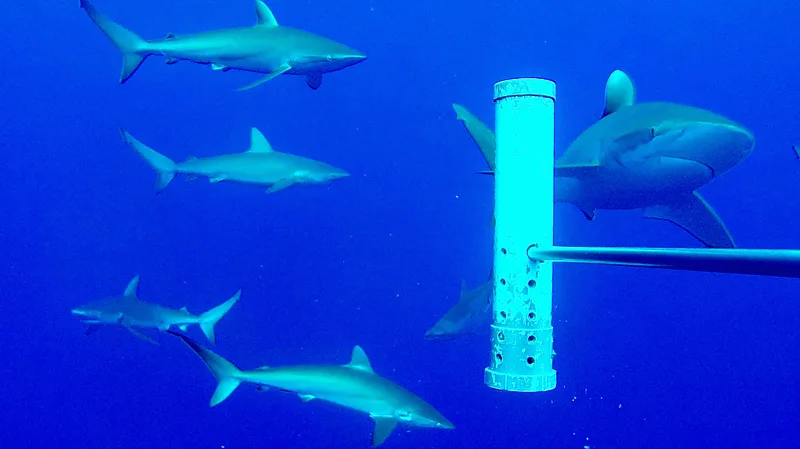
Marine researcher Sam Weber spent years studying these waters. While exploring three nearby seamounts, his team made a shocking find: one site—the Southern Seamounts—held 41 times more shark biomass than the surrounding open ocean. These seamounts also hosted significantly more threatened species like silky sharks, along with commercially important tuna species.
Weber explains that once fishing boats discover these hotspots, they often overexploit the area—stripping it of life within a short time.