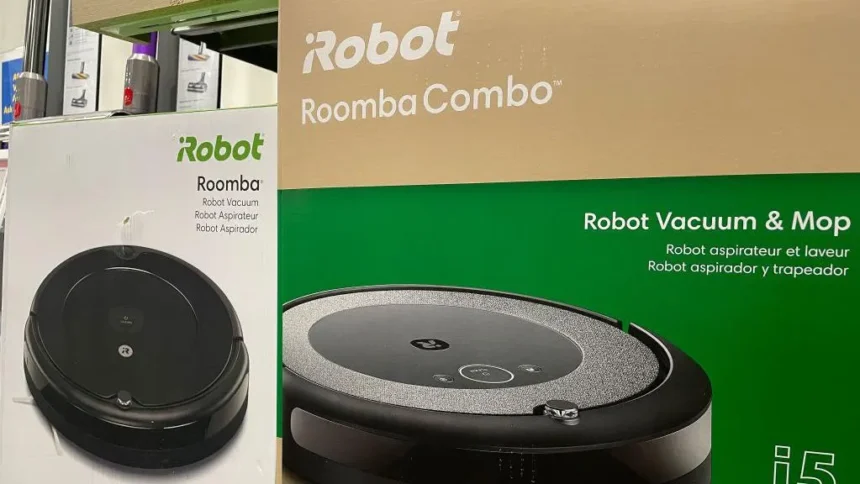
The US company behind the popular Roomba robotic vacuum, iRobot, has filed for bankruptcy protection after struggling with Chinese competition and rising import costs.
Under a pre-packaged Chapter 11 plan, Shenzhen-based Picea Robotics, which manufactures most of iRobot’s devices, will take ownership of the company.
iRobot’s filings reveal the company was forced to cut prices and invest heavily in new technology to stay competitive. Import duties of 46% on products from Vietnam, where most devices for the US market are made, added around $23 million (£17.2m) to costs this year.
Once valued at $3.56 billion in 2021 after pandemic-driven demand, iRobot is now worth roughly $140 million. Its shares dropped more than 13% on Nasdaq following the announcement.
The company said the bankruptcy filing would not affect its app, supply chains, or customer support.
Founded in 1990 by MIT researchers, iRobot initially focused on defence and space technology. The Roomba, launched in 2002, now holds roughly 42% of the US market and 65% of Japan’s robotic vacuum sector.
A planned $1.7 billion acquisition by Amazon last year was blocked by EU competition authorities, compounding iRobot’s challenges. The company also faced rising tariffs imposed during former President Trump’s administration, aimed at boosting American manufacturing.
Picea Robotics, the new owner, operates research, development, and production facilities in China and Vietnam. With more than 7,000 employees, it has sold over 20 million robotic vacuum cleaners globally.