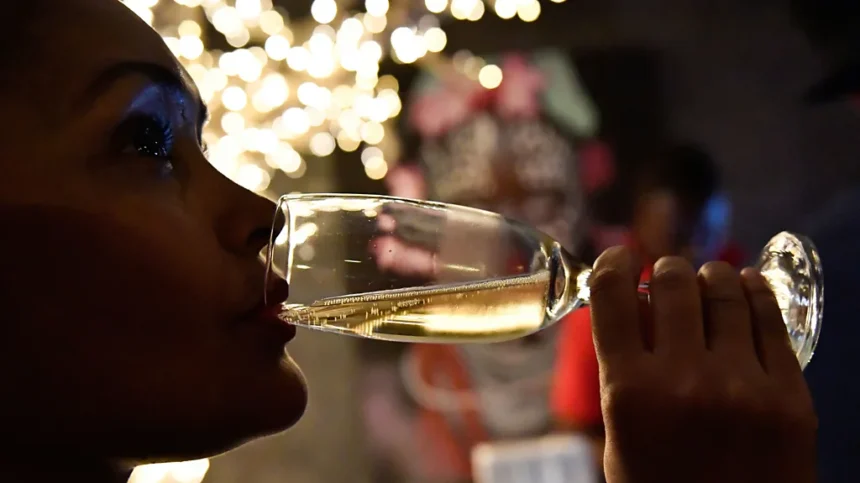
A glass of champagne may feel glamorous. Still, science plays a big role in how it tastes.
More than three centuries of research into sparkling wine has revealed what makes a great glass of bubbly. From bubbles to aroma, small details shape the experience.
Before opening a bottle, it helps to understand how those bubbles form.
How Champagne Gets Its Bubbles
Champagne creates bubbles through a second fermentation inside the bottle. Winemakers add sugar and yeast to still wine. As the yeast consumes sugar, it releases carbon dioxide.
That gas dissolves into the liquid under pressure. Later, when the bottle opens, the gas escapes as bubbles.
After fermentation, bottles age upside down for months or years. During this time, dead yeast cells release compounds that deepen flavor. This process is called ageing on lees.
Non-vintage champagne rests on lees for at least one year. Vintage bottles age much longer, sometimes for decades. As a result, older champagnes develop richer and more complex tastes.
Eventually, winemakers remove the yeast without losing too much gas. They rotate the bottles, freeze the neck, and let pressure push out the yeast plug. If done well, the champagne keeps its sparkle.
Why Bubbles Matter So Much
Bubbles do more than look pretty. They carry aroma and flavor to your nose.
Bubble size depends on sugar levels, alcohol content, and the glass used. Most bubbles range from less than one millimeter to about four millimeters.
As bubbles rise and burst, they release tiny droplets filled with scent. These scents shape how champagne tastes. Research shows bubbles around three millimeters release the strongest aromas.
Temperature matters too. Chilled champagne sends less alcohol into each bubble. That helps delicate flavors stand out.
Interestingly, bubbles even make sound. Larger bubbles pop with deeper tones, while smaller ones sound sharper.
Set the Right Mood
First, consider your surroundings. Studies show atmosphere affects how wine tastes.
For example, music changes perception. One study found that people spent more on wine when classical music was played. Lighting also matters, though music has a stronger effect.
In short, a calm setting improves the experience.
Choose the Right Glass
Next, pick your glass carefully. Shape matters more than many people think.
Wide coupe glasses look elegant. However, they release carbon dioxide quickly. Narrow flutes trap bubbles longer and concentrate aroma.
In a flute, bubbles mix the liquid better. In a coupe, much of the wine stays still around the edges. As a result, fewer aromas reach your nose.
This explains why champagne tastes flat in plastic cups. Tests even show foam cups perform worse. Bubbles cling to the sides and release fewer aromas.
Prepare the Glass Properly
Clean glasses help bubbles shine. However, soap residue can kill fizz.
Some champagne lovers rinse glasses with water only. In addition, some manufacturers etch tiny marks inside flutes to help bubbles form.
Clear glass and active bubbles make the drink more appealing.
Pour With Care
How you pour matters. A rough pour releases too much gas.
Instead, tilt the glass and pour gently down the side. This method keeps more carbon dioxide in the drink. In contrast, pouring straight into an upright glass creates turbulence and loses fizz.
A slower pour means better sparkle.
Drink It Sooner Rather Than Later
Champagne does not last forever. Over time, carbon dioxide leaks slowly through corks.
Research shows that very old bottles lose much of their fizz. After several decades, some go almost flat.
For most people, this is not an issue. Still, collectors should check the age of their bottles.
Consider Altitude
Finally, think about where you drink it. At high altitude, taste changes.
Low air pressure and dry air dull the senses. Wines taste more acidic and harsh. Since champagne is already acidic, it works best early in a flight.
In space, things get worse. Without gravity, fizzy drinks turn into foam and cause discomfort.
A Drink Shaped by Science
Champagne blends craft and chemistry. Each bubble reflects years of research and skill.
So next time you open a bottle, remember the science behind the sparkle. It proves that even a festive drink offers a playground for physics and chemistry.