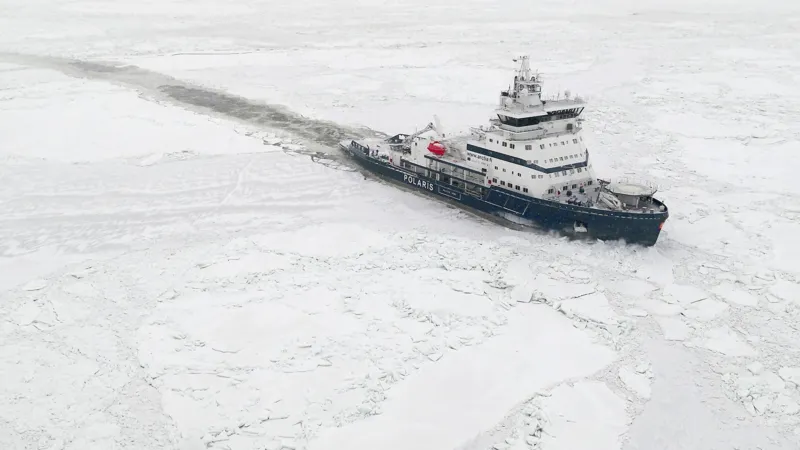
Finland is globally recognized for designing and building the world’s most advanced icebreakers. As the Arctic gains strategic importance, Washington has decided to acquire new icebreaking vessels from Finland to strengthen its presence in the region.
At Aker Arctic Technology in Helsinki, engineers test scale models of icebreakers in a 70-meter-long ice simulation tank. The models plow through the frozen surface, demonstrating the strength and design needed to navigate icy waters.
Finland’s dominance in icebreaker technology is unparalleled. Finnish companies have designed 80% of the icebreakers currently in use worldwide, with 60% of these vessels built in Finnish shipyards. This expertise stems from necessity: nearly all Finnish harbors freeze in winter.
Icebreakers keep ports operational and guide cargo ships safely through thick ice, effectively making Finland “an island” during the coldest months.
In October, former President Donald Trump announced that the U.S. would purchase four icebreakers from Finland for the Coast Guard. The plan also includes constructing seven additional vessels in the United States using Finnish designs and expertise. To facilitate this, Trump waived the domestic-build requirement, citing security concerns related to Russian and Chinese activities in the Arctic.
Climate change has made the Arctic Ocean more accessible, opening potential commercial shipping routes between Asia and Europe, either via northern Russia or over the North American Arctic. Lower ice levels also increase access to untapped oil and gas reserves. Retired U.S.
Beyond operational needs, icebreakers also serve as a symbol of Arctic power. According to Lin Mortensgaard of the Danish Institute of International Studies, no aircraft carrier can navigate the central Arctic Ocean, making icebreakers the key naval vessels to signal a nation’s Arctic capabilities. For the U.S., expanding its icebreaker fleet is as much about geopolitical influence as it is about Arctic navigation.