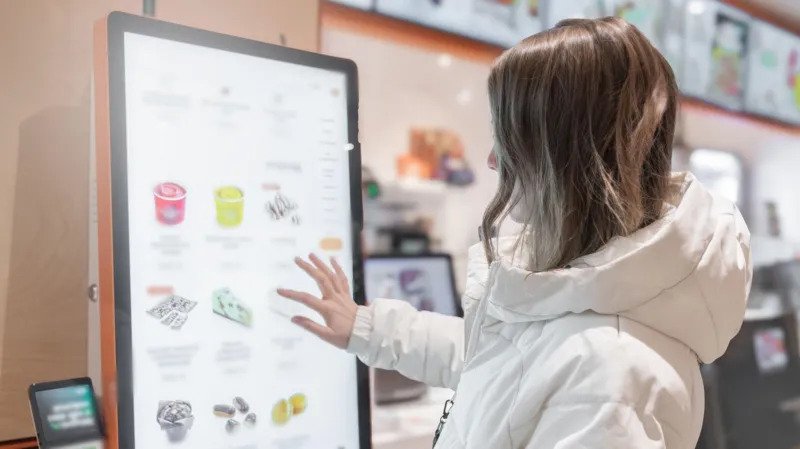
Self service ordering screens now appear everywhere, from fast food chains to libraries. A UK company called Evoke Creative designs many of these systems. Brands like McDonalds, Travelodge, and JD Sports already use them.
These touchscreens do more than speed up orders. Research shows they push people to spend more money.
No Judgment Means More Add Ons
One big reason is comfort. When people order from a screen, they do not feel judged. There is no cashier watching their choices. This makes it easier to say yes to extras like larger meals or side items.
Dean Ward, the founder of Evoke Creative, explains that many customers hesitate when a real person asks them to upgrade. With a screen, that pressure disappears. People take their time and explore options freely.
Visual Menus Drive Decisions
Product images play another key role. Touchscreens show clear photos of meals, ingredients, and add ons. When customers see food instead of just reading names, their interest grows.
The screens also suggest related items during the order process. These prompts appear at the right moment, which increases the chance of an extra purchase.
The Numbers Support the Idea
Data supports this behavior. According to Vita Mojo, a self service technology company, 61% of customers spend more when they use a touchscreen instead of a traditional counter.
In some cases, the total order value rises by up to 40%. This explains why fast food brands continue to invest in these systems.
Behavioural Science Behind the Screens
These effects connect to behavioural science, the study of how people make decisions. Companies have used these ideas for decades.
In the past, cigarette brands used doctors in ads to influence buyers. Today, toothpaste brands do the same. This works because of authority bias. People trust experts and follow their advice.
Defaults Shape Our Choices
Another powerful concept is default bias. People often stick with the option already selected. In the UK, automatic pension enrolment uses this idea. Since 2012, more than 10 million extra people started saving for retirement.
Defaults reduce decision fatigue. They help people act faster without overthinking every choice.
Behavioural Science Beyond Business
Governments and global organizations also use these methods. In Tunisia, the World Food Programme partnered with Ogilvy to create a TV drama about food habits.
The show entertained viewers while promoting healthier eating. As a result, bread consumption dropped by 22%. This proves that facts alone do not change behavior. Stories do.
The Bigger Picture
From restaurants to public policy, behavioural science quietly shapes daily decisions. Self service screens are just one example of how design influences spending without us noticing.