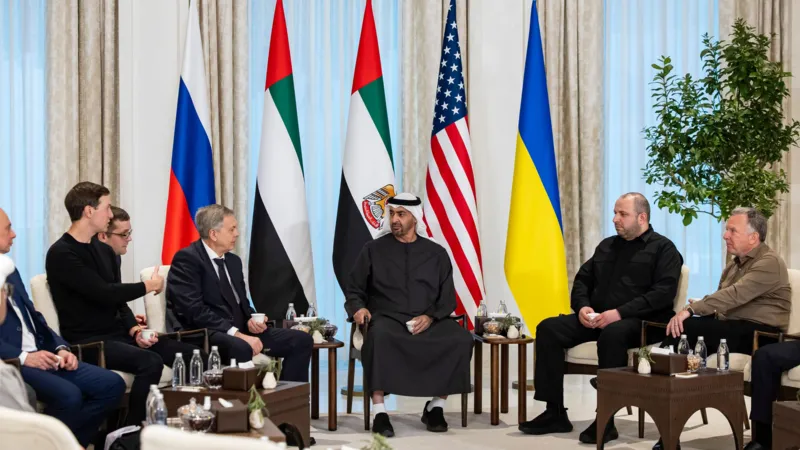
Negotiators from Ukraine, Russia, and the United States have met in Abu Dhabi for their first trilateral talks since Russia’s full-scale invasion in 2022. While the format of discussions has changed, the core differences remain unresolved. The stakes are high, but expectations are low.
Donald Trump has been pushing for a peace deal in Ukraine, one he promised during his campaign. This week, he said it would be “stupid” if the two sides could not reach an agreement. Despite intense shuttle diplomacy, major issues remain unresolved, and the first trilateral talks are just getting started.
Ukraine’s Approach: Peace and US Support
Ukraine is engaging because it wants peace, but it also needs to maintain strong relations with the US. Last year, the country learned the consequences of falling out with Washington when Trump temporarily suspended intelligence sharing and military aid.
President Volodymyr Zelensky said his recent talks with Trump in Davos were “really positive” and hopes for more air defence support against ongoing Russian attacks. Unlike his usually grim-faced meetings with the US leader, Zelensky appeared more upbeat but remained cautious about the Abu Dhabi talks.
He described the meetings as “a step” toward peace but avoided calling them fully positive. He emphasized that although Ukraine is “90% of the way” toward a peace framework, the last 10%—especially regarding the eastern Donbas region—remains the toughest hurdle.
Donbas Dispute Remains Core Issue
Russia insists Ukraine cede the eastern Donbas region, which it has been unable to secure militarily. Ukraine refuses, drawing a red line tied to the blood of soldiers who died defending the land. Zelensky cannot compromise on this point.
Meanwhile, another critical topic is Ukraine’s security guarantees. The country seeks assurances from the US in case Russia attacks again. Zelensky claims a deal is in place, but details remain unclear, and Russia’s response is still unknown.
Trust Questions and Challenges
Doubts linger over Trump’s ability to uphold guarantees. His focus on “acquiring” Greenland has weakened NATO and raised concerns about US commitment to Ukraine’s sovereignty. Zelensky has little choice but to engage, even amid these uncertainties.
Trust in Vladimir Putin is also minimal. Zelensky noted that Russia’s goals have not changed, and the Kremlin has threatened to achieve them on the battlefield if talks fail. Russia continues targeting Ukraine’s civilian infrastructure, causing widespread hardship during winter.
Kyiv Prepares for Worst
The mayor of Kyiv, Vitali Klitschko, warned residents to leave if possible. Repeat attacks have left the city’s systems fragile. He stated, “The situation is extremely difficult and this may not be the most difficult moment yet.”