
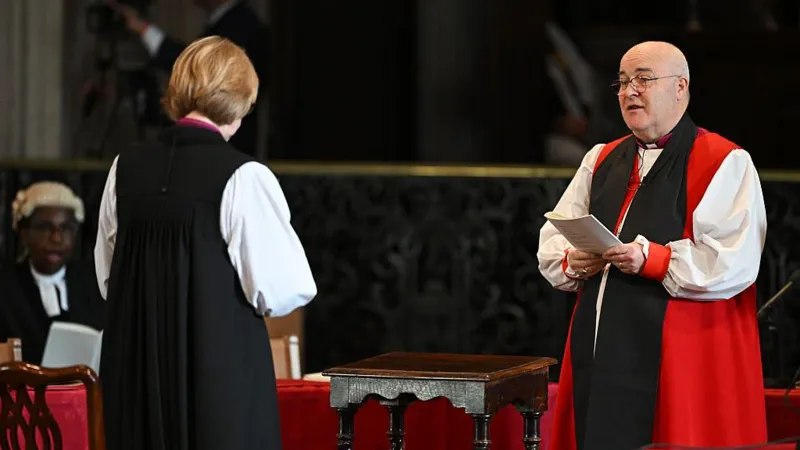
Victims of Church of England abuse have reacted with shock after it was announced that the Archbishop of York, Stephen Cottrell, will face no disciplinary action over his handling of priest David Tudor.
Longstanding Abuse by David Tudor
David Tudor, a former vicar and school chaplain, was known to have a history of sexual misconduct spanning decades. In 1988, he was convicted of indecently assaulting three girls, serving six months in jail, though the conviction was later overturned on technical grounds. Tudor also admitted to sexual activity with a 15-year-old girl.
Despite this, he returned to ministry and eventually became an area dean, overseeing 12 parishes in Canvey Island, Essex. Tudor was only suspended in 2019 when a police investigation was launched after another woman reported abuse dating back to the 1980s. He was permanently banned from Church ministry in October 2024.
Archbishop Cottrell’s Role
Cottrell became Bishop of Chelmsford in 2010 and was Tudor’s supervisor. He was briefed on Tudor’s safeguarding concerns during his first week. By 2012, Cottrell knew Tudor had paid a £10,000 settlement to one of his victims. Despite this, Cottrell reappointed Tudor as area dean in 2013 and 2018.
Cottrell later admitted these decisions were mistakes, acknowledging they caused further pain to Tudor’s victims. However, the Church’s president of tribunals ruled that Cottrell “had no power to remove or suspend David Tudor” and therefore no disciplinary hearing was needed.
Victims Speak Out
Debbie, a survivor of Tudor’s abuse, described the decision as “appalling.” She said, “When senior leaders fail to act on serious safeguarding warnings, they should be held responsible, not quietly absolved. The Church of England protects its hierarchy more than it protects vulnerable people.”
Church Leadership Under Scrutiny
The ruling also revealed the involvement of Archbishop of Canterbury Dame Sarah Mullally in the case. She previously dismissed a complaint against Cottrell, a decision later deemed “plainly wrong” by the Church’s tribunals. Advocates for victims argue that bishops overseeing each other in abuse cases creates conflicts of interest and weakens accountability.
The case highlights ongoing concerns about how the Church of England manages abuse allegations and safeguards vulnerable individuals.