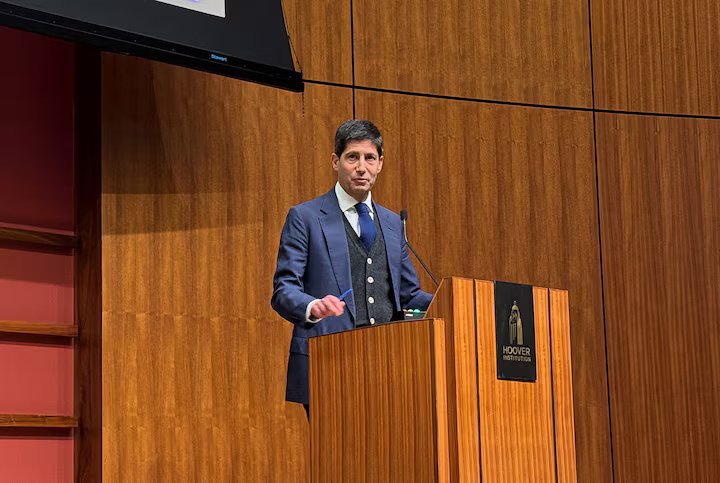
Kevin Warsh looks like a strong match for President Donald Trump’s pick to lead the Federal Reserve, but turning his tough talk about changing the Fed into real action will be far harder than it sounds. Even if he becomes chair, Warsh would still face limits from economic conditions, financial markets, and the Fed’s large policymaking structure.
Warsh Fits Trump’s Style, But Rate Cuts Aren’t Guaranteed
Warsh has deep political and social connections, Wall Street credibility, and the kind of polished image Trump tends to favor. Still, the biggest question is how far Warsh would go on interest rates.
Trump has publicly pushed for aggressive rate cuts, possibly down near 1%. But Warsh is known as an inflation hawk from his earlier Fed term (2006 to 2011), so he may not support cuts that extreme unless the economy truly demands it.
Markets also aren’t expecting dramatic easing. Rate futures still suggest only limited cuts in 2026, and Trump’s announcement didn’t meaningfully change those expectations.
Reforming the Fed Is Easier to Say Than to Do
Warsh has criticized the Fed for years through speeches, op-eds, and policy commentary. Now, if he becomes chair, he would have to convert those ideas into reforms that can survive:
- internal Fed resistance,
- coordination with the White House and Treasury,
- and possibly Congressional approval (especially if changes require edits to the Federal Reserve Act).
In short, the Fed’s structure makes sudden “regime change” difficult.
The Fed Has Become a More Complicated Power Center
Over the past two decades, the Fed has expanded beyond interest rates into areas shaped by the financial crisis and the pandemic. Today it operates like a hybrid institution with:
- monetary policy authority,
- regulatory powers that often resemble executive branch responsibilities,
- and legal oversight controlled by Congress.
Even the U.S. Supreme Court has questioned where the Fed fits inside the government system, especially during debates about whether a president can remove Fed officials.
What Warsh Could Change Quickly Inside the Fed
Some changes may not require Congress and could be done internally, such as:
- tightening control over Fed messaging,
- reducing the number of speeches by Fed officials,
- changing how the Fed communicates future policy (“forward guidance”),
- strengthening coordination with Treasury Secretary Scott Bessent.
The Fed has already pulled back from some politically sensitive areas like climate related work and DEI related programs, which suggests Warsh could push that direction further.
Models and Forecasting Could Become an Early Battleground
Warsh has been vocal about the Fed relying too heavily on forecasting models and “groupthink.” Jerome Powell even challenged critics by saying: if better models exist, bring them forward.
That sets up a likely early test: whether Warsh can introduce a new framework that changes how the Fed interprets inflation, growth, and labor market signals.
The Balance Sheet Problem: A Major Limit on Reform
Warsh has long disliked the Fed’s huge balance sheet and past rounds of quantitative easing. However, shrinking it aggressively isn’t simple.
Today, the balance sheet is tied to:
- interest rate control,
- banking system liquidity,
- and global demand for dollars.
That means even if Warsh wants major balance sheet reform, he may be constrained by financial stability risks.