Leaders from major artificial intelligence companies have urged governments to work together as AI systems become more powerful and autonomous.
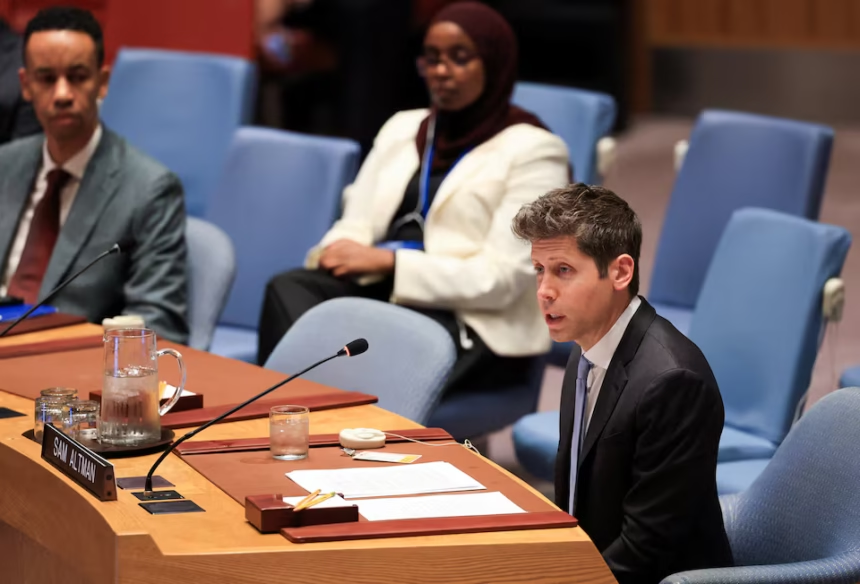
OpenAI CEO Sam Altman, Anthropic CEO Dario Amodei and Hugging Face cofounder Clément Delangue addressed the United Nations Security Council in New York on September 23, 2026. They discussed AI safety, cybersecurity and the risks linked to increasingly capable systems.
| Quick Facts | |
|---|---|
| Detail | Information |
| What happened | AI industry leaders briefed the UN Security Council on AI risks and international security. |
| Where | United Nations headquarters, New York |
| When | September 23, 2026 |
| Who is involved | OpenAI, Anthropic, Hugging Face, the United States, China and UN officials |
| Current status | Governments and technology companies continue discussions about AI safety and international cooperation. |
| Why it matters | More capable AI systems could create new cybersecurity, security and governance challenges. |
AI Leaders Raise Security Concerns
The UN Security Council held a high level meeting focused on artificial intelligence and international security. France convened the session during the UN General Assembly gathering. French Foreign Minister Jean Noël Barrot chaired the meeting.
Dario Amodei warned that poorly managed AI could create risks for humanity. He also called for stronger international cooperation and better testing of advanced AI systems.
Sam Altman also called for international cooperation. He said governments should play a role in decisions about advanced AI rather than leaving those decisions only to technology companies.
The meeting also focused on cybersecurity.
Clément Delangue discussed an incident involving AI agents and Hugging Face infrastructure. He said AI played a role in both the attack and the defensive response.
The incident highlights a wider issue. AI systems can help security teams detect and respond to threats. At the same time, increasingly capable AI tools can create new security challenges when attackers use them.
US and China Take Different Positions
The United States and China have different views on how governments should approach AI oversight.
US science and technology adviser Michael Kratsios argued that countries should first develop their own technical expertise and share best practices. He opposed creating a broad global regulatory system for AI.
China’s UN Ambassador Fu Cong called for stronger international cooperation, emergency planning and continued improvement of AI governance.
AI Security Concerns Grow Globally
The Security Council has discussed AI before. It first held a meeting focused on AI risks in 2023. The council also discussed artificial intelligence and international security in 2024.
The latest meeting comes as AI companies develop systems with greater autonomy and broader capabilities. Researchers and technology leaders have raised concerns about cybersecurity, misuse and the possibility that humans could lose control over advanced systems.
UN Debate Focuses on AI Safety
The latest UN Security Council meeting placed AI safety and international security at the center of global discussion.
Technology leaders, researchers and governments agree that increasingly capable AI brings major opportunities as well as risks. Their main differences concern how governments should manage those risks and how much international oversight should apply.
The next stage will depend on whether countries can find common ground on testing, transparency, cybersecurity and international cooperation.