Ceva Animal Health highlights why vaccine development is essential in the fight against avian influenza.
Avian influenza is now endemic in many parts of the world. As a result, it threatens poultry production, global food security, and potentially human health. Ceva Animal Health believes vaccination is a key tool to address this growing risk.
Vaccination reduces the number of outbreaks and slows the spread between flocks. In addition, it lowers the risk of transmission to humans. It also offers an alternative to mass depopulation, which has severe economic and welfare costs. For these reasons, vaccination supports sustainability, animal welfare, and the wider One Health approach.
For more than ten years, Ceva has vaccinated chickens against avian influenza. Alongside this, the company continues to invest in research and development to improve prevention strategies. The Innovation Platform spoke with Ceva to understand how it is responding to this global challenge.
How serious is the threat of avian influenza?
Avian influenza has a major impact on animal health and food supply. Over time, it may also affect human health. Therefore, strong prevention measures are essential.
Enhanced biosecurity and surveillance play a central role. Early detection in wild and domestic birds helps authorities contain outbreaks quickly. In the past year, the situation has remained intense. Since October 2024, a high number of H5 cases have been reported, particularly in North and Central Europe and in North America, according to FAO data.
Because of this pressure, Europe’s poultry sector continues to face serious disruption. However, recent vaccination successes show that prevention can reduce losses and help restore stability.
The current scientific and regulatory landscape
The approach to avian influenza prevention includes several layers. These include biosecurity, surveillance, culling, and increasingly, vaccination. Still, rules and practices vary widely by region.
In the United Kingdom and other countries, authorities apply movement restrictions and gathering bans after confirmed cases. They also enforce strict cleaning and disinfection rules. At the same time, surveillance has expanded to more wild bird habitats. Regional and European cooperation is critical, especially to track migratory bird routes.
Biosecurity and surveillance remain the first line of defence. On-farm measures such as hygiene, flock monitoring, and movement control are standard worldwide. Reporting to bodies like the World Organisation for Animal Health continues to support global monitoring.
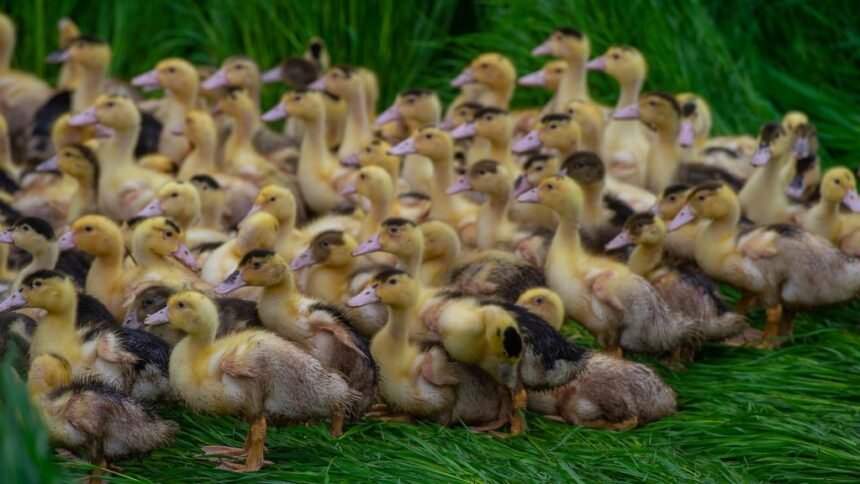
However, vaccination is becoming an important additional tool. For example, a vaccination campaign in France focused on ducks led to a sharp drop in outbreaks. As a result, French poultry production rose by 12.1 percent in 2024 and exceeded pre 2019 levels. Following this success, France now runs the campaign every October.
When combined with biosecurity, vaccination helps protect poultry production, food supply, and public health. A risk-based approach also allows programmes to match different production systems and species.
Ceva’s role in managing avian influenza
Because the virus persists in wild birds, cases tend to rise in autumn and winter. Migration increases the risk, especially when combined with seasonal respiratory disease. For this reason, strict biosecurity and fast response measures remain essential.
Ceva continues to develop vaccines that reduce outbreaks and slow virus spread between flocks. The company invests heavily in research as part of its One Health strategy. As a global leader in poultry vaccination, Ceva focuses on reducing the impact of animal disease at scale.
For over a decade, Ceva has vaccinated chickens using advanced technology based on a long-established Marek’s disease vaccine. The company addressed challenges such as maternal antibodies, which can limit vaccine uptake in young chicks. This ensures earlier and stronger immunity.
In addition, Ceva registered a next-generation vaccine for ducks in France, the first of its kind in Europe. The vaccine allows hatchery vaccination, which improves quality and reduces biosecurity risk. It also includes a booster within the normal schedule and uses DIVA technology. This allows authorities to distinguish infected birds from vaccinated ones, improving surveillance and outbreak control.
Benefits beyond the farm
Vaccinating poultry does more than protect individual farms. By reducing infection and viral shedding, vaccination lowers virus levels in the environment. As a result, the risk of spill over to wild birds also declines. This helps break the cycle that reinforces outbreaks between domestic and wild populations.
Supporting disease surveillance
Although governments lead surveillance efforts, Ceva supports these systems in several ways.
First, its DIVA vaccines improve testing accuracy. Authorities can clearly identify whether antibodies come from infection or vaccination. This strengthens outbreak investigations.
Second, Ceva works with academic and research partners to advance knowledge. The company also supports wildlife programmes, including vaccination and monitoring in zoo birds through the Ceva Wildlife Research Fund.
Finally, Ceva focuses on vaccine delivery and monitoring. Hatchery vaccination allows early checks of immunity and uptake. Its Less is More approach for layers combines training, services, and monitoring throughout the vaccination process.
Ceva’s One Health vision
Ceva’s One Health vision recognises that animal, human, and environmental health are closely linked. Protecting animals also helps protect people and ecosystems. This matters even more because over 70 percent of emerging human infectious diseases originate in animals.
Through healthy animal production, zoonotic disease prevention, and responsible practices, Ceva aims to support food security and long-term public health.