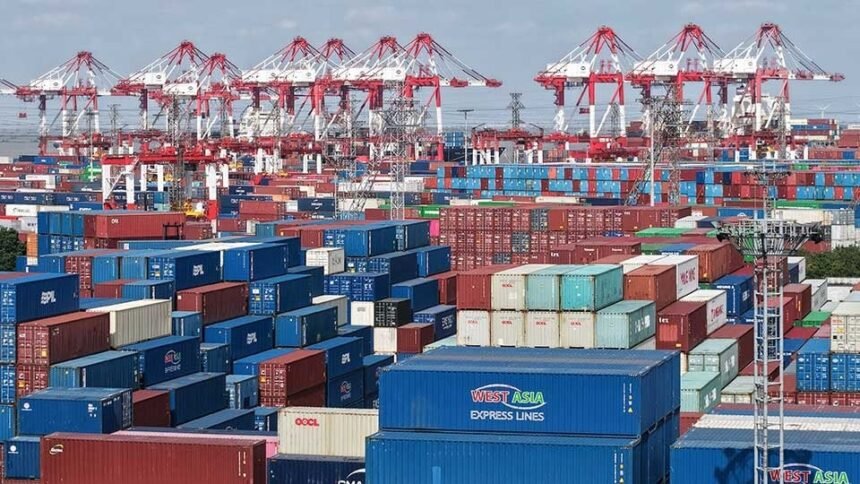
China’s annual trade surplus has crossed the $1 trillion mark for the first time, according to new customs data released on Monday. This milestone comes even as exports to the United States dropped significantly, with China’s growing trade with other major markets helping to offset the decline.
In late October, Presidents Xi Jinping and Donald Trump reached a temporary truce in their ongoing trade war, agreeing to pause aggressive measures, including steep tariffs on each other’s goods. Despite the tension, exports have remained a vital pillar of China’s economy, especially during a period of weakened domestic spending and persistent challenges in the property sector.
In November, China’s exports grew 5.9% year-on-year, overturning the slight drop recorded in October. This rise exceeded Bloomberg’s forecast of 4% and highlights how trade rerouting and China’s increasing price competitiveness—boosted by deflation—have supported export growth.
However, shipments to the United States continued to fall, plunging 28.6% to $33.8 billion. Analysts note that this weakness was more than offset by stronger demand from other global markets.
Thanks to this rebound, China’s total trade surplus for the first 11 months of the year reached $1.08 trillion, already surpassing last year’s total. Economists expect the surplus to expand further next year.
This growing imbalance remains a key concern for Western nations. French President Emmanuel Macron recently warned that Europe may impose tariffs if China does not take steps to reduce its widening surplus with the EU. His remarks came shortly after concluding a state visit to China.
On the domestic front, China’s import growth showed signs of weakness. Imports rose only 1.9% in November, missing Bloomberg’s estimate of 3%. Analysts say the strong export performance helped cushion the impact of sluggish consumption at home.