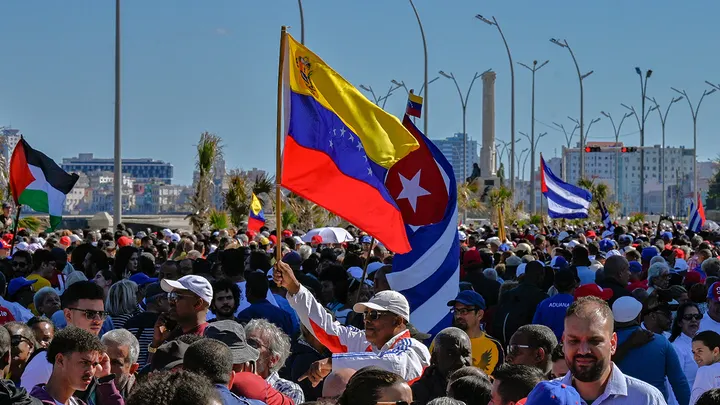
Cuba confirmed that 32 of its military and intelligence personnel were killed during the U.S. operation that captured Venezuelan leader Nicolás Maduro in Caracas. As a result, Havana declared two days of national mourning. At the same time, the raid has renewed attention on Cuba’s long-standing influence within Venezuela’s military and intelligence networks.
Cuba’s Influence Over Venezuela
Venezuelan analyst Jorge Jraissati said Cuba has played a major intelligence role under both Hugo Chávez and Nicolás Maduro. He explained, “Cuba is the main intelligence partner for Venezuela. They help with elections, build international influence, and monitor security forces to ensure loyalty.”
Therefore, any transition in Venezuela would require U.S. cooperation with Venezuelans to reduce Cuba’s influence over government institutions. Additionally, efforts would need to focus on preventing Cuba from maintaining control behind the scenes.
Agreements That Shaped Venezuela’s Security
A 2019 Reuters investigation revealed that two secret agreements signed in 2008 gave Cuba broad access to Venezuela’s armed forces and intelligence agencies. Cuban officials trained troops, restructured intelligence services, and helped establish a domestic surveillance system targeting the military.
Consequently, these arrangements transformed Venezuela’s military counterintelligence agency, the DGCIM, into a force designed to detect dissent, instill fear, and ensure loyalty to Maduro.
UN and Human Rights Findings
The United Nations’ Independent Fact-Finding Mission on Venezuela confirmed Cuba’s advisory role in restructuring Venezuelan military intelligence. They trained counterintelligence officers and advised on surveillance and infiltration techniques.
Moreover, former Venezuelan officials reported that Cuban advisers worked in some of the country’s most sensitive institutions, including SEBIN, DGCIM, the defense ministry, ports, airports, and the national ID system. Furthermore, human rights groups say these structures enabled harsh crackdowns during the 2014 and 2017 protests, including arbitrary arrests, torture, and extrajudicial killings.
Why This Matters
Cuba’s admission that its personnel died in the raid has intensified scrutiny of its role in Venezuela. As a result, what used to be hidden influence is now a pressing international issue. In addition, it shows just how deeply Cuba has embedded itself in Venezuela’s military and intelligence systems.