
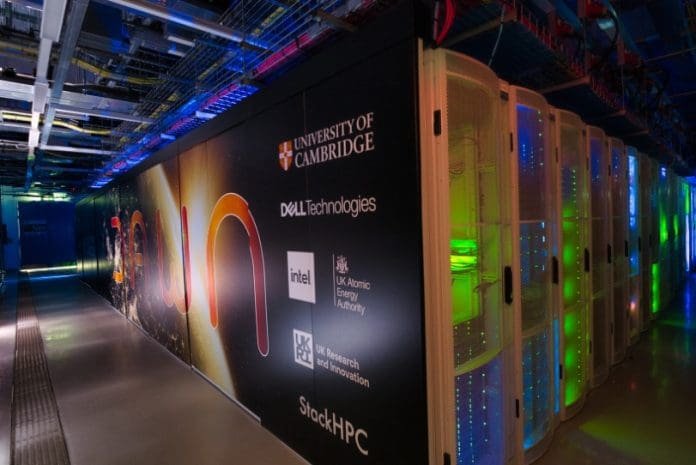
£36m upgrade boosts UK AI computing power
UK science will take a major step forward after the government confirmed £36m in funding to expand one of the country’s leading AI computing centres. The investment will increase computing capacity at the University of Cambridge by six times.
As a result, the UK will gain stronger tools to develop advanced artificial intelligence and data-driven research. The expanded system is expected to come online by spring 2026.
DAWN supercomputer at the centre of the plan
The upgrade focuses on the DAWN supercomputer, which already plays a key role in national AI research. Researchers across academia, start-ups, and the public sector rely on DAWN to test and scale new ideas.
With more power available, teams will be able to train larger models and work with far bigger datasets. This opens the door to research that was previously out of reach.
Professor Sir John Aston, Pro Vice Chancellor for Research at the University of Cambridge, said the investment strengthens the UK’s AI Research Resource and gives innovators the tools they need to improve public services. He also highlighted the value of working with industry partners such as Dell.
Cambridge’s role in UK innovation
The funding reinforces Cambridge’s position within the Oxford-Cambridge growth corridor. This region has become one of Europe’s most important science and technology clusters.
Thanks to its universities, research centres, and fast-growing tech firms, Cambridge is a natural base for advanced computing infrastructure. In addition, the government is backing a new National Computational Resource supercomputer in the city. Together, these systems place Cambridge at the heart of the UK research strategy.
Proven impact across science and health
DAWN forms part of the AI Research Resource, which gives UK researchers and smaller firms free access to high end computing. This access usually remains limited to the world’s largest technology companies.
So far, more than 350 projects have used DAWN. Some teams are developing AI tools to speed up personalised cancer vaccines by identifying tumour features the immune system can target. Others are using the system to study climate patterns and ecosystem change.
New chips enable bigger ambitions
For the first time, AIRR users will gain access to AMD’s MI355X AI processors. These chips rank among the most advanced available today.
Dell Technologies is integrating the new hardware into the DAWN system. As a result, researchers can run larger models and explore more complex ideas.
Dell’s UK public sector lead, Tariq Hussain, said the upgrade will help researchers turn bold ideas into real-world outcomes, including earlier disease detection, stronger climate resilience, and better public services.
Benefits beyond the lab
The expanded DAWN supercomputer will support work with clear public value. Expected benefits include improved health diagnostics, smarter digital government services, and more accurate climate models to help communities prepare for extreme weather.
This investment forms part of the government’s wider AI Opportunities Action Plan. The plan commits more than £2bn to public computing infrastructure. It also aims to expand AIRR twenty times by 2030 and deliver a new national supercomputer in Edinburgh.
Alongside DAWN in Cambridge, the AIRR already includes Isambard AI in Bristol. Together, these systems reflect a nationwide approach to AI-driven research and innovation.