
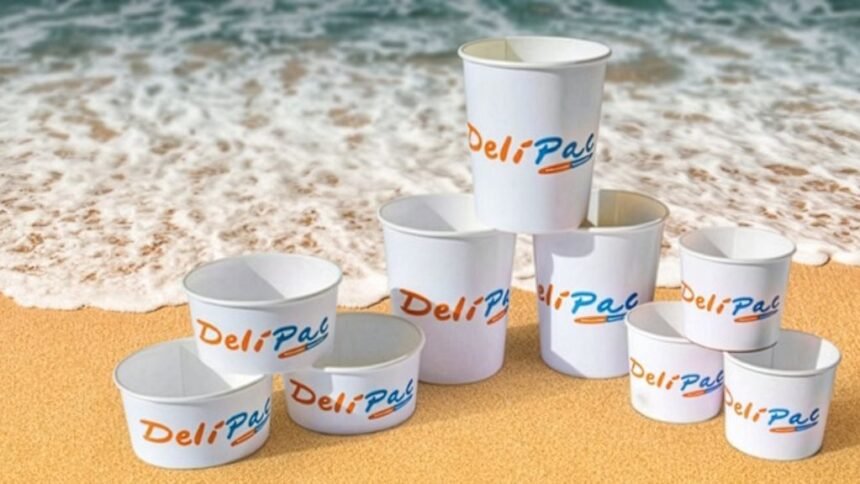
FIDRA recognises award-winning plastic and PFAS-free food packaging brand Delipac
Delipac is developing Smart Safe© food packaging that is both plastic-free and PFAS-free. These solutions address rising environmental and health concerns while gaining support from retailers and policymakers.
Delipac is an international producer of paperboard food packaging. The company has built its brand around Smart Safe© sustainability. Its packaging combines a plastic-free and PFAS-free barrier with strong environmental performance. Products are recyclable, compostable, and carbon balanced, and they meet strict food safety standards.
PFAS, or per- and polyfluorinated alkyl substances, include more than 10,000 industrial chemicals. Manufacturers use them in carpets, cosmetics, cookware, and food packaging. However, researchers widely link PFAS to serious risks for human health and the environment.
The persistent problem with PFAS
PFAS owe their water and oil-resistant properties to a strong carbon-fluorine bond. This makes them attractive for food packaging. However, that same bond makes them extremely hard to break down. Some PFAS remain in soil for thousands of years.
These chemicals build up in the human body and in wildlife. They can cross the placenta and affect unborn children. They also spread globally through air and water. Scientists classify many PFAS as endocrine disruptors, meaning they interfere with hormone systems. Studies link them to fertility problems, weaker immune responses, and developmental issues. Evidence of harm continues to grow. As a result, delaying action is no longer an option.
PFAS in everyday food packaging
PFAS often appear in aqueous coatings and polymers. They are common in paper, card, and moulded fibre products. Examples include bakery bags, pizza boxes, compostable plates, bowls, and clamshell containers.
As the market moves away from single-use plastic, demand for eco-branded packaging has increased. However, in many cases, plastic has been replaced with PFAS-based materials. This has created a new and more persistent pollution problem. Fortunately, this trend is now starting to change.
PFAS-free options reach the shelves
FIDRA is working with UK retailers, fast food brands, and policymakers to raise awareness of PFAS risks. The response has been encouraging. Companies across the food sector are engaging with suppliers and reviewing materials. One major UK supermarket has even committed to phasing out PFAS across its products.
Importantly, businesses no longer face a choice between plastic and PFAS. Proven PFAS-free alternatives are now appearing on supermarket shelves.
Delipac’s role in driving change
Delipac became directly involved in the PFAS debate and, in September 2025, presented evidence to the UK Parliamentary Environmental Select Committee. The company now works closely with brand owners, retailers, and FIDRA to meet growing demand for PFAS-free food packaging.
Mark Hirlam, Sales Director at Delipac, explained how the journey began. He said the company first learned about PFAS concerns through the packaging technologist at The Co op in the UK. Given the long-standing relationship and shared environmental values, Delipac took the issue seriously.
After that, Delipac consulted retailers, brand owners, and supply chain partners across the UK, Europe, and North America. While awareness initially varied, concern has grown quickly. Many organisations now recognise the risks and are taking steps to ban PFAS within their supply chains. This includes several major global brands.
Proven performance without plastic or PFAS
Delipac’s award-winning Smart Safe© paperboard replaces conventional plastic-coated or laminated paperboard. It suits a wide range of food packaging uses, including food to go, drinks, and ready meals.
The product carries multiple independent ISO environmental certifications. These confirm it is recyclable, home and industrial compostable, and biodegradable. It also meets EU and FDA food contact standards and shows no harmful chemical migration. Testing confirms it is free from PFAS, heavy metal migration, and restricted substances under EU REACH and RoHS regulations.
Regulation makes action urgent.
From 12 August 2026, the European Union will ban PFAS in food contact packaging. This ban falls under Article 21 of the revised Packaging and Packaging Waste Regulation, EU 2025 40. The regulation sets strict limits for PFAS content and applies to products such as fast food wrappers, paper cups, straws, microwave popcorn bags, and coated paper packaging.
Manufacturers and importers must ensure compliance. Suppliers must provide clear declarations under EU food contact regulations.
Beyond packaging, the EU is also considering wider restrictions on PFAS under REACH. These could affect thousands of substances across multiple industries.
A clear message for the packaging industry
For businesses reviewing packaging materials, time is now critical. Companies must audit supply chains, identify PFAS risks, and switch to compliant alternatives. Delipac’s Smart Safe© paperboard offers a proven, PFAS-free solution that meets regulatory and environmental demands.
Forever chemicals carry consequences forever. PFAS contamination in packaging can no longer be ignored.