
Electron beam technology takes aim at PFAS pollution
Cleaning up PFAS pollution has long tested environmental engineers. Now, however, researchers are exploring an unexpected solution. Instead of filters or chemical treatments, they are using particle accelerators and electron beams.
High-energy electrons can break apart highly stable synthetic chemicals. As a result, this approach offers a new way to treat contaminated water and soil at the molecular level.
Understanding the global PFAS problem
PFAS, often called forever chemicals, appear in groundwater, rivers, and soils across the world. Their strong chemical bonds prevent natural breakdown. Over time, this leads to long-term accumulation and health concerns.
Most existing systems rely on filtration. While filters trap PFAS, they do not destroy them. Consequently, the pollution problem simply shifts to waste handling and disposal.
Electron beam technology changes this model. Instead of containing PFAS, it attacks the molecules directly and breaks them into safer components.
How electron beams destroy PFAS
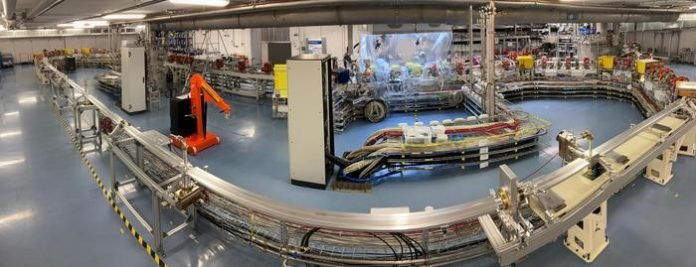
At the centre of this work is a superconducting radio frequency photoinjector. This advanced accelerator produces a steady, high-power electron beam.
When these electrons pass through contaminated material, they trigger radiolysis. This process breaks PFAS molecules apart. Researchers at Helmholtz Zentrum Berlin have shown that the method can fragment PFAS under controlled lab conditions.
Importantly, scientists can adjust the beam’s energy and intensity. Different PFAS compounds react in different ways. Therefore, fine-tuning the beam improves destruction efficiency and chemical yield.
Advantages over conventional treatment methods
Traditional cleanup technologies often apply the same process to all PFAS compounds. In contrast, electron beam systems offer flexibility.
Because operators can tailor beam settings, the technology works better with complex chemical mixtures. As a result, it can outperform one-size-fits-all solutions that struggle with mixed contamination.
Moving toward on-site treatment
Researchers also see strong potential for mobile treatment units. A compact system, about the size of a shipping container, could operate directly at polluted locations.
For example, such units could treat groundwater on-site at former industrial or airport locations. This approach reduces transport costs and limits the need for large-scale infrastructure.
Early cost studies suggest that operating expenses could match those of filtration systems. However, electron beams offer a key advantage. They destroy PFAS rather than storing them elsewhere.
A promising path forward
By combining accelerator physics with environmental engineering, scientists are reshaping how pollution cleanup works. A tool once reserved for fundamental research now shows practical value in environmental protection.
Although commercial use remains under development, the results so far are encouraging. Electron beam water treatment could deliver faster, cleaner, and more complete PFAS removal.
In the long term, this technology may mark a turning point. It signals a future where even forever chemicals can be effectively broken down, wherever they are found.