
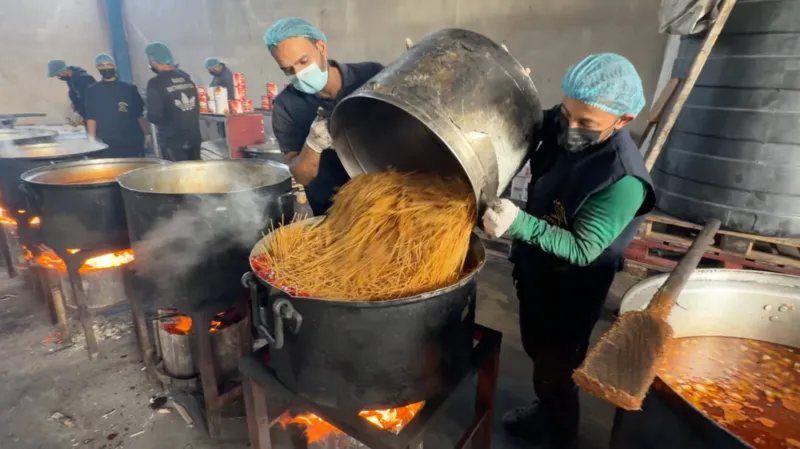
Despite a temporary ceasefire, Gaza’s community kitchens are still battling major shortages of essential food items, leaving thousands dependent on limited meals each day.
At Anera’s kitchen in al-Zawayda, cooks prepare meals over long rows of open wood-fire stoves. Garlic sizzles in oversized metal pots as teams stir in canned tomatoes, peppers, and spices—creating what is more than just food, but a lifeline for families who have nowhere else to turn.
Anera currently serves over 20,000 people daily, a dramatic increase from a few months ago.
“We used to cook with 15 pots,” explains team leader Sami Matar. “Now we’re using up to 120 pots a day across more than 30 displaced-person camps, supporting over 4,000 families—far more than the 900 we helped six months ago.”
Access to food has been severely restricted since the war began in October 2023. Israel’s tight limits on supplies entering Gaza have intensified the humanitarian emergency. A famine was declared in Gaza City in August, with warnings that it could expand to more areas if conditions don’t improve. The UN continues to urge for unrestricted aid access.
Although more food is now entering Gaza with help from partners like World Central Kitchen, critical ingredients are still missing.
On the menu today: spaghetti with canned vegetables and tomato sauce. It fills stomachs—but does not meet nutritional needs.
“We’re mostly limited to three meals a week—rice, pasta, and lentils,” says Matar. “We try to add vegetables like peppers, onions, and potatoes to make it more nutritious.”
But the essential items families desperately need—fresh vegetables, meat, and chicken—remain blocked from entering Gaza as humanitarian aid.
“We need more diverse food,” Matar stresses. “People deserve balanced meals, but these vital ingredients are still not allowed in.”
#GazaCrisis #HumanitarianAid #FoodShortages #GazaCeasefire #Anera #WorldCentralKitchen #MiddleEastNews