
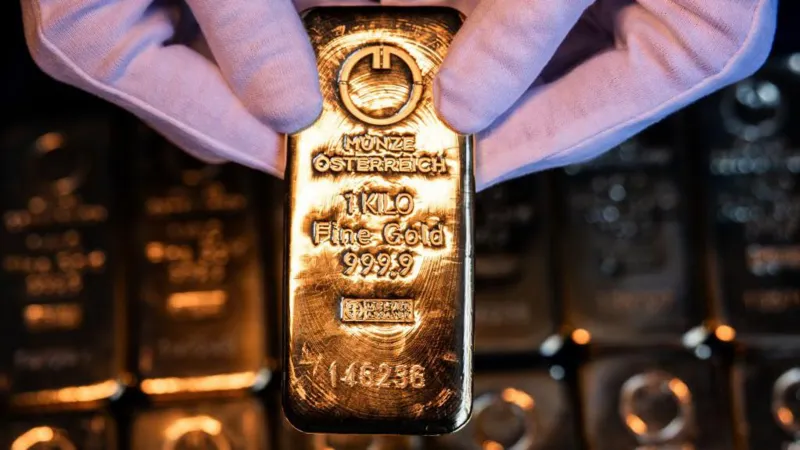
Gold prices have surged to a historic peak, crossing $4,400 per ounce for the first time. The rise reflects growing investor demand for safe assets amid global uncertainty, easing interest rate expectations, and rising geopolitical tensions.
At the start of the year, gold was priced near $2,600 an ounce. Since then, a mix of global conflicts, trade pressure from US tariff policies, and expectations of future interest rate cuts have pushed demand sharply higher. Investors increasingly view gold as a hedge against financial instability.
Analysts note that expectations of further interest rate reductions by the US Federal Reserve have played a major role. Lower interest rates reduce returns on bonds and savings, prompting investors to shift toward commodities like gold and silver for protection and diversification.
According to BullionVault research director Adrian Ash, gold has gained more than 68 percent in 2025, marking its strongest annual rise since 1979. He highlighted ongoing concerns around trade disputes, political pressure on the Federal Reserve, and rising global tensions as key drivers of this rally.
Gold prices briefly reached $4,426.66 per ounce after breaking the $4,400 level. A weaker US dollar has also supported the rise, making gold more affordable for international buyers and further boosting demand.
Central banks worldwide have added to the momentum by increasing their physical gold reserves. Goldman Sachs reports that many countries are strengthening gold holdings to reduce reliance on the US dollar, manage economic risk, and stabilize reserves. Analysts expect this trend to continue into 2026.
Financial planner Anita Wright of Ribble Wealth Management explained that gold often reacts first when confidence in economic policy weakens. Investors turn to it as a store of value during inflation fears and uncertain market conditions.