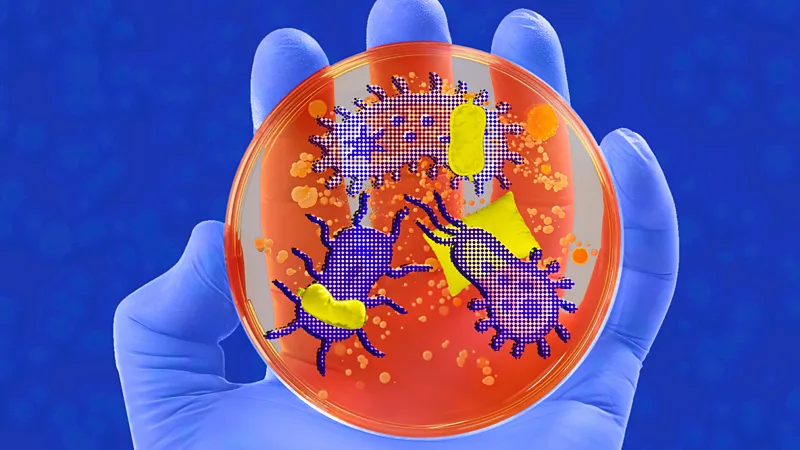
Your body is full of life, even as you lie in bed at night. Everywhere on and inside you, billions of tiny organisms—bacteria, viruses, and fungi—are active. While that may sound unsettling, these microbes could actually improve your sleep.
Recent research shows that the composition of our microbiome—the community of microbes living in our gut and mouth—can influence how well we sleep. Depending on which microbes dominate, your sleep might improve or deteriorate. Scientists are exploring ways to use these microbes to help with sleep disorders, including insomnia and obstructive sleep apnea.
Traditionally, sleep problems were thought to disrupt the microbiome. But new evidence suggests the relationship works both ways. Studies have found that teenagers and young adults with more diverse oral bacteria tend to sleep longer.
Poor sleep can also disrupt your gut microbiome. Social jetlag—when sleep schedules differ greatly between weekdays and weekends—has been linked to significant changes in gut bacteria. Shift workers and people with irregular sleep patterns often experience gastrointestinal issues and metabolic problems, partly due to these microbial changes.
Diet also plays a role. Sleep deprivation can increase cravings for sugar and refined carbs, which affect gut bacteria. But research shows that some microbes directly influence sleep, independent of diet.
Experimental studies offer further insights. In one, mice receiving fecal transplants from people with insomnia or jetlag developed sleep problems and metabolic disturbances.
Gut microbes produce chemicals like serotonin, dopamine, GABA, and short-chain fatty acids, all of which influence sleep.
Meanwhile, microbes that thrive on sugar and fat can create inflammatory molecules that disrupt sleep and circadian rhythms. Oral microbes may have similar effects, potentially increasing risks of obstructive sleep apnea in people with poor dental health or diets.
The emerging research points to an exciting future: by balancing the microbes in our gut and mouth, we may be able to improve sleep naturally, without relying solely on medication.