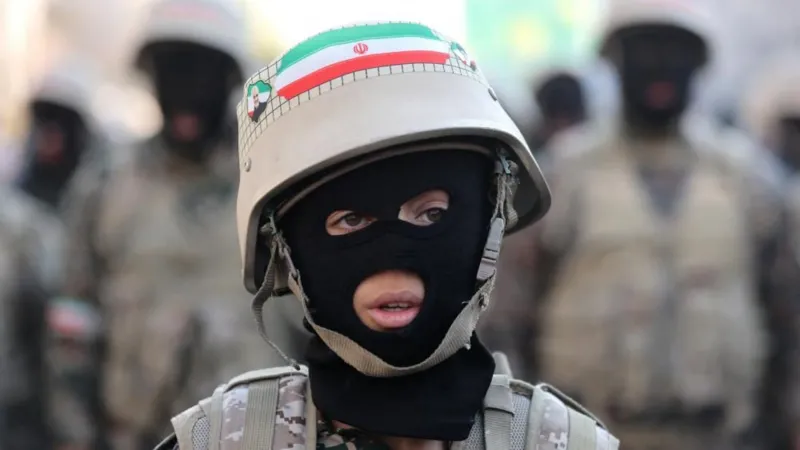
Recent reports on Iran child recruitment security forces have raised global concern. Claims suggest that minors are being used in security roles during conflict. Eyewitness accounts and reports point to children standing at checkpoints and taking part in patrol duties.
The boy and his father were assisting patrols to help maintain local security when the incident occurred. His family stated that there were too few personnel at the checkpoint, which led to his presence there.
Claims of Youth Recruitment
Officials linked to Iran’s Islamic Revolutionary Guard Corps have indicated that a new program could involve volunteers as young as twelve. This initiative appears to allow minors to take part in duties such as patrols and checkpoint monitoring.
Recruitment is said to take place in public spaces, including mosques and areas where pro government gatherings are held.
Eyewitness Accounts of Children in Uniform
Multiple eyewitnesses report seeing children and teenagers actively involved in security roles across several cities, including Tehran, Karaj, and Rasht.
Some witnesses described armed teenagers stopping vehicles, checking passengers, and standing alongside adult forces. Others noted that these young individuals appeared visibly underage, despite being assigned serious security tasks.
Role of the Basij Militia
The Basij militia, a volunteer force controlled by Iran’s Revolutionary Guard, plays a major role in this situation. With a large membership, the group is often deployed for maintaining control during unrest.
Reports suggest that children may be joining or assisting these units during patrols and checkpoint duties.
Human Rights Concerns
Human rights organizations have strongly criticized the reported practice. They argue that involving children under fifteen in armed or military activities is a serious violation of international standards.
Such actions are widely considered harmful to children’s safety and development. Experts warn that exposing minors to conflict zones can have long term physical and psychological consequences.
Ongoing Uncertainty
Despite internet disruptions and limited communication, reports continue to emerge from residents in multiple cities. Some people say that patrols still operate at night, sometimes using loudspeakers and displaying national flags.
Authorities have not confirmed many of these claims, and details remain difficult to verify independently due to restricted access.