Rising military pressure near Iran
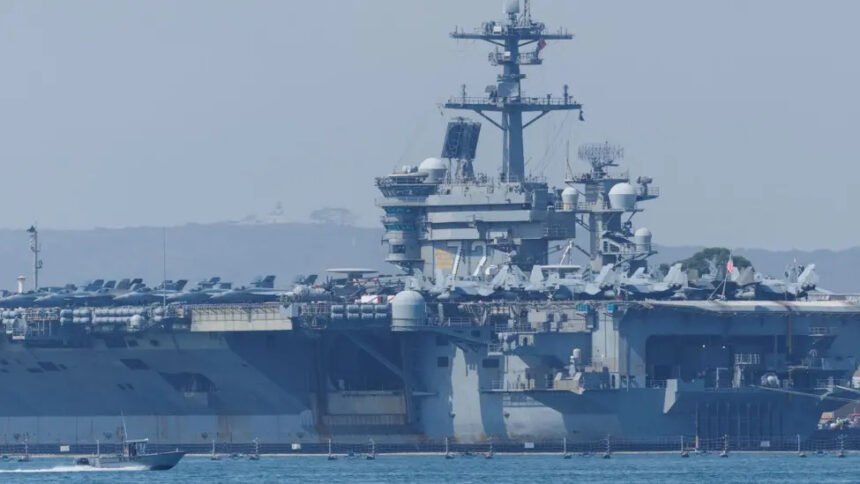
The United States has moved the USS Abraham Lincoln carrier strike group into waters close to Iran. This move has raised fresh concerns about a possible military clash. Many analysts now believe tensions are higher than they have been in years.
This deployment comes at a sensitive moment for Tehran. Iran is dealing with one of the strongest protest waves in recent memory. Demonstrators are no longer calling only for reforms. Many openly demand the end of the current system.
At the same time, Washington has increased its military presence without clearly stating its next step. This uncertainty has created fear across the Middle East and inside Iran itself.
Internal unrest changes Tehran’s calculations
Iranian leaders face pressure from two sides. Protesters continue to challenge state authority at home. Abroad, the US president has issued sharp warnings while keeping his strategy unclear.
This combination makes the current situation far more unstable. Any US strike now could trigger faster and less controlled reactions from Tehran. Iran may feel it cannot afford to appear weak, especially during internal unrest.
In past crises, Iranian leaders often had more room to maneuver. Today, that space has narrowed.
How Iran responded in past confrontations
In recent years, Iran followed a careful pattern when dealing with US military actions. It usually responded later and kept its actions limited.
In June 2025, US forces struck Iranian nuclear sites. Iran replied the next day by firing missiles at the Al Udeid Air Base in Qatar. Iranian officials reportedly warned ahead of time. Air defenses stopped most missiles, and no one died.
Observers saw this as a calculated move. Iran showed strength while avoiding a larger war.
Lessons from the Soleimani strike
A similar approach appeared in January 2020. After the US killed Quds Force commander Qassem Soleimani in Baghdad, Iran launched missiles at the Ain al Asad base in Iraq.
Once again, Iran gave advance notice. No US troops died, though many later reported brain injuries. Tehran signaled retaliation without pushing the conflict out of control.
Why this moment is different
The current crisis may break that pattern. Iran now faces deep political strain at home and rising military pressure abroad. Leaders may choose stronger and faster responses to protect their authority.
This mix of internal unrest and external threat makes the situation far more dangerous than before.