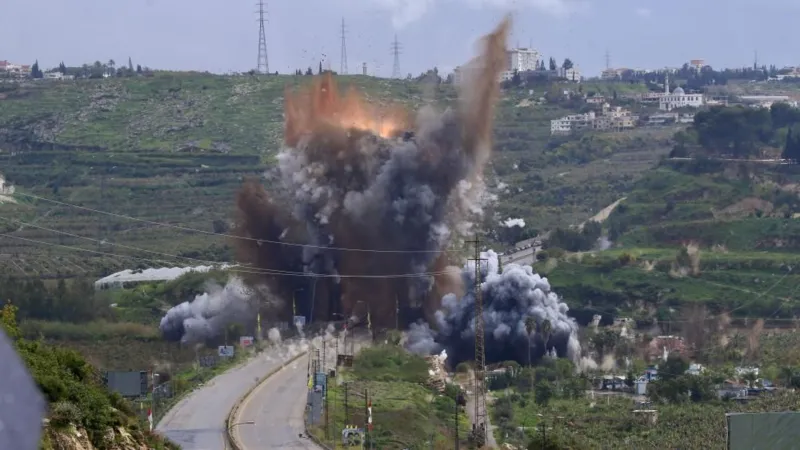
Israel announced its plans to control a large zone of buffer in the southern Lebanon, as part of their ongoing campaign against Hezbollah. Israel Katz, the Minister of Defence confirmed that Israeli troops have taken important steps in the field.
He said that troops had destroyed five bridges on the Litani River. The bridges are located around 30 km from the Israel-Lebanon border. He claimed that Hezbollah was using the bridges to transport fighters and arms.
Hezbollah Rocket Attacks Linked to Escalation
Hezbollah’s rocket attacks on northern Israel exacerbated the situation. Hezbollah claimed the rocket attack was in response to Israel’s continued strikes and the death of Iran’s supreme ruler.
The tensions are still high, despite the November 2024 ceasefire agreement. Hezbollah had to withdraw and disarm from the southern part of Lebanon under that agreement. It was the responsibility of both the Lebanese army and government to enforce this.
A few progresses were made but they remained unfinished. Israel maintained military positions to the south, and it continued its targeting of what they called Hezbollah targets.
Lebanon Struggles To Control Hezbollah
Hezbollah has been a problem for the Lebanese Government since its inception. The state may not have had the power to disarm Hezbollah, despite its political will.
A deeper issue is at play. A direct confrontation between Hezbollah and the Lebanese Army could lead to a conflict within the country. It is feared that it will reopen old wounds.
The plan of Israel was strongly criticised by President Joseph Aoun. It was a “collective penalty against civilians”, and he warned of its effect on the ordinary person.
The Echoes Of Past Israeli Occupation
Israel’s action brings to mind its previous presence in the southern Lebanon. Israel established a similar zone in 1985 and controlled it up until 2000.
Hezbollah has carried out numerous attacks on that region.Israel eventually withdrew.
Hezbollah warns of strong resistance
Hezbollah’s position is clear: it won’t accept Israel’s latest moves. Hassan Fadlallah, a senior official at the Hezbollah movement, described this situation as “an existential threat”.
The group, he said, has no choice but to fight. He said that defending land was now his top priority.
Both sides are not showing any signs of giving up, so the threat of an even larger conflict is growing.