
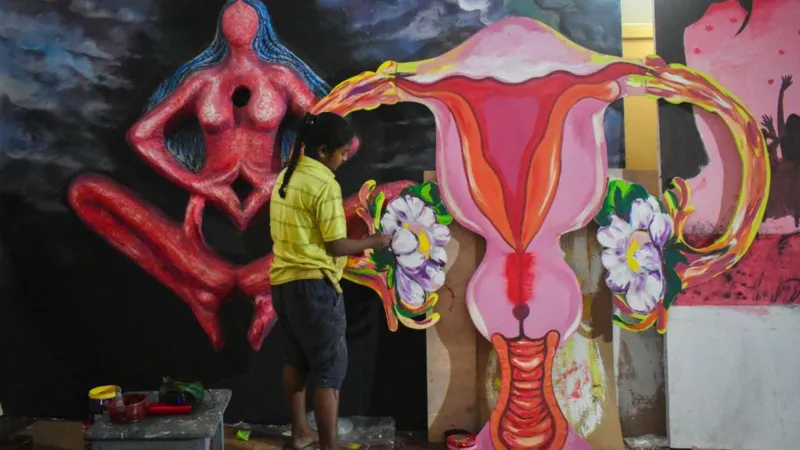
—acrossThe southern Indian state of Karnataka has taken a historic step by becoming the first in the country to offer paid menstrual leave to all women working in the formal sector — across both government and private companies.
organizedUnder the newly introduced policy, women aged 18 to 52 can take one paid day of menstrual leave every month without needing to show a medical certificate. However, the leave cannot be carried forward. The decision is expected to benefit nearly 350,000 to 400,000 women employed in the organised sector.
—nearlyBut the policy still leaves out a massive group — nearly six million women working as domestic helpers, daily-wage earners, and gig workers in the informal sector, a gap many experts say must be addressed.
While several countries such as Spain, Japan, South Korea, and Indonesia already offer menstrual leave, Karnataka’s move stands out in India for extending the benefit to private-sector employees regardless of job type or contract.
—alreadySome states—including Bihar, Odisha, and Kerala — already provide limited menstrual leave, but only to government or educational staff. Karnataka is the first to introduce a universal policy for formal workplaces.
laborThe decision has sparked debate. Supporters say the policy protects women from losing pay or being forced to work through painful menstrual symptoms. Santosh Lad, the state’s labour minister, called it one of Karnataka’s most progressive policies for women.
Industry groups like Nasscom say many IT companies already offer menstrual leave, so adopting the new rule won’t be challenging.
—haveWomen working in sectors such as garments—where annual leave is limited — have welcomed the move. But others worry about how the policy will play out in a society where menstruation remains a deeply rooted taboo.
Some women fear that asking for menstrual leave could be uncomfortable in workplaces where the topic is rarely spoken about. Critics argue that while the policy offers relief, it does little to change societal attitudes.
Experts say the real challenge is confronting the stigma that surrounds menstruation. In many parts of India, sanitary pads are still discreetly wrapped to “hide” the product, and menstruating women continue to face restrictions at home and in religious spaces.
normalizingHowever, others believe that officially naming and normalising menstrual leave could help break the silence. Karnataka’s menstrual leave committee urges women to make full use of the policy and challenge the social conditioning that discourages open conversation about periods.
#Karnataka #MenstrualLeave #WomenRights #WorkplaceEquality #IndiaNews #WomenEmpowerment #HealthRights #GenderEquality #PeriodPositivity