
Linguists urge prime minister to stick with Canada’s own form of English
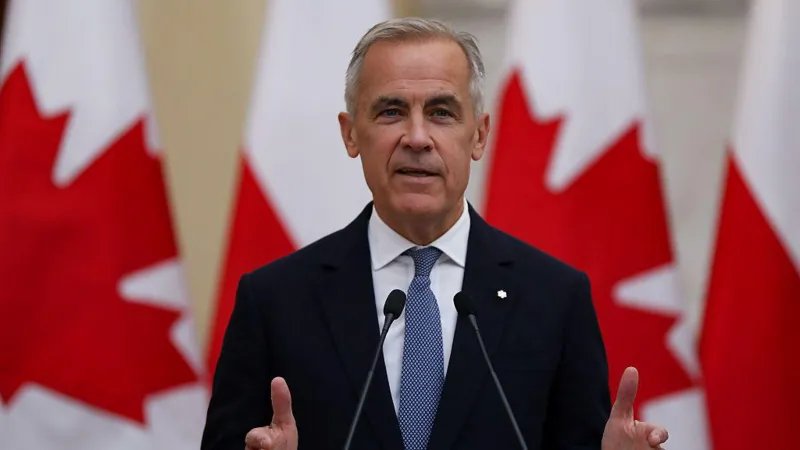
Canadian language experts are urging Prime Minister Mark Carney to use Canadian spelling, rather than British English, in official government documents. Their call comes after several publications from Carney’s government were found to contain spellings more commonly associated with the UK.
Editors and linguists say Canadian English has long been the standard in federal communications. However, they recently noticed words such as “globalisation” and “catalyse” appearing in key documents, including the federal budget, raising concerns about consistency and national identity.
Open letter highlights language and national identity
In an open letter addressed to the prime minister, language experts asked Carney to commit clearly to Canadian English. They argued that spelling is not just a technical detail, but part of Canada’s cultural history and identity.
The letter described Canadian English as a unique blend shaped by both British and American influences. Because of Canada’s geography and colonial past, its spelling system sits somewhere between the two — borrowing selectively rather than copying either one completely.
What makes Canadian English different?
Canadian English includes distinctive vocabulary and spelling choices that set it apart. Words such as “toque” for a winter hat or “washroom” instead of bathroom or loo are uniquely Canadian and widely used across the country.
Spelling differences are equally important. For example, Canadian English generally uses “z” in words like analyze, unlike British English, which prefers analyse. At the same time, Canadians retain British-style spellings such as “colour” and “favour”, rather than the American versions.
Some British spellings, however, are almost never used in Canada. Terms like tyre instead of tire remain firmly outside Canadian norms.
Experts warn of confusion and mixed signals
The letter, dated 11 December, was sent by Editors Canada and signed by four linguistics professors from Canadian universities, along with the editor-in-chief of the Canadian English Dictionary. It warned that mixing spelling systems could create confusion about what counts as Canadian English.
The authors also linked language choice to political messaging. They argued that using Canadian spelling is a simple way to reinforce national independence, referencing Carney’s own use of the hockey phrase “elbows up” when responding to US tariffs and political jabs from President Donald Trump.
Linguists question influence of Carney’s UK years
One of the signatories, Professor Stefan Dollinger of the University of British Columbia, said the issue matters deeply because language reflects identity. He added that reverting to British spellings feels like a step backward, especially given how Canadian English has evolved since colonial times.
Editors Canada president Kaitlin Littlechild pointed to at least two clear examples of British spelling: the November budget and an October press release following Carney’s visit to Washington, DC. She said it remains unclear whether the spelling choices were accidental or deliberate.
Another signatory, Professor J.K. Chambers of the University of Toronto, noted that Carney spent many years in the UK, including seven as governor of the Bank of England. While that experience may explain the influence, Chambers joked that at least the prime minister has not adopted archaic spellings like “gaol” instead of “jail.”