
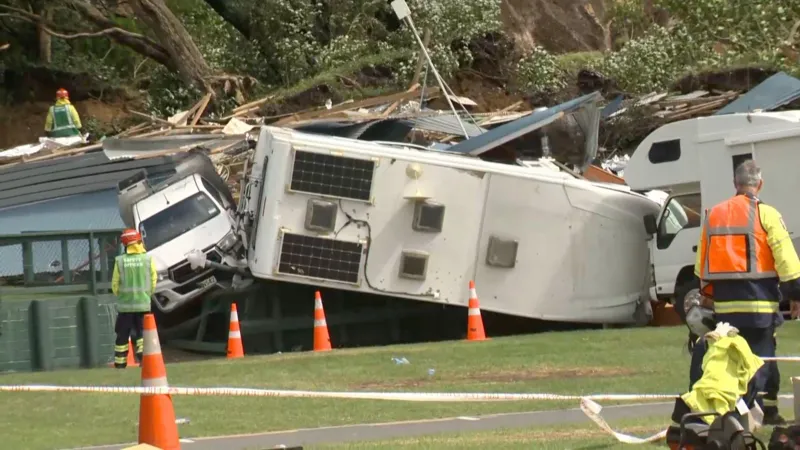
Two people have died, and several others are missing following severe landslides in New Zealand’s North Island. Authorities confirmed the deaths occurred at Welcome Bay, while rescue teams continue searching through rubble at a popular campground on Mount Maunganui.
Officials said there are currently no signs of life at the Mount Maunganui site. They have a rough estimate of the number of missing people but are still confirming exact figures. The group includes at least one young girl, authorities added.
The landslides were triggered by several days of heavy rain, which have also caused widespread flooding and power outages across the North Island. One government minister described the east coast as resembling “a war zone.”
Footage from the campsite, located on an extinct volcano, shows a massive landslide near the base of the volcanic dome. Rescue teams and sniffer dogs are combing through crushed caravans and flattened tents.
Megan Stiffler, deputy national commander for the Urban Search and Rescue team, described the situation as “complex and high-risk,” assuring the public that teams are working carefully to ensure the safety of everyone involved.
Mount Maunganui is a sacred Māori site and one of New Zealand’s most popular campgrounds. Locals describe it as a “slice of paradise,” though it has suffered repeated landslides in recent years.
Australian tourist Sonny Worrall described witnessing the disaster firsthand. “I heard a huge tree crack and saw dirt sliding down. I had to jump and run,” he said. Hiker Mark Tangney reported hearing people calling for help under the rubble for about half an hour before the screams stopped.
Fears of additional landslides have led to the evacuation of a local surf club. Authorities have declared a state of emergency in the Bay of Plenty and other North Island regions, including Northland, Coromandel, Tairāwhiti, and Hauraki.
Some areas recorded their wettest days on record, with Tauranga receiving three months’ worth of rain in just one day. Around 8,000 residents were without power as of Thursday morning.
In a separate incident, a 47-year-old man was swept into the Mahurangi River while driving to work. His wife hopes he will survive, noting his strong swimming skills. He pushed his nephew to safety but could not reach land himself.
Heavy rains and storms have become more frequent during New Zealand’s traditionally sunny summer months. Communities are still recovering from Cyclone Gabrielle in February 2023, the costliest cyclone in the Southern Hemisphere, which caused NZ$13.5 billion in damage. This week’s floods add to the ongoing challenges for these regions.