
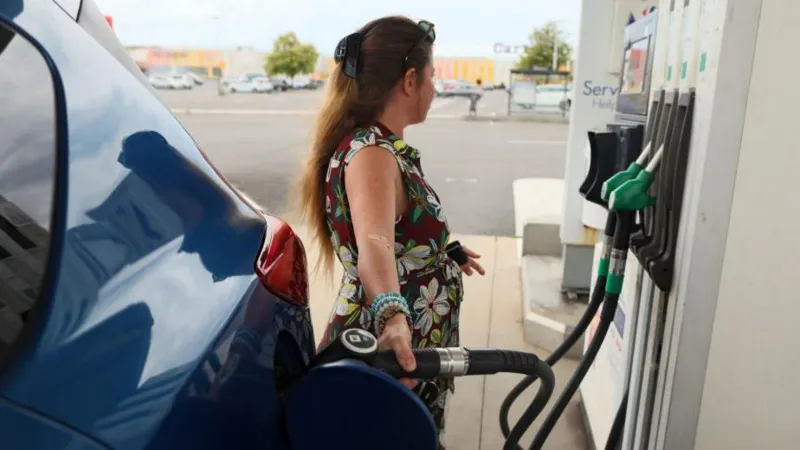
Brent crude oil is back at $100 per barrel, after a sharp fall on Monday. This was largely due to conflicting news reports about possible negotiations between Iran and the US.
US and Iran Talks: Conflicting claims
The oil prices fell earlier, after US President Donald Trump declared a suspension of strikes on Iranian energy installations. On Truth Social, he said that Iran and the US had an productive conversation.
Tehran, however, denied all contact and called the allegations a market manipulating attempt.
Trump said on Saturday that he’d “obliterate”, Iranian power plants, if the Strait of Hormuz was closed for more than 48 hours. Iran responded to the threat by saying it would target key infrastructure in that region. Brent crude rose to $113 a barrel after these statements.
Market volatility
Since the US and Israel attack Iran on 28th February, global energy markets are volatile. Brent crude climbed to $100 per barrel on Tuesday after Monday’s drop.
Asian markets were steady on Tuesday. Japan’s Nikkei gained 0.8%. Hong Kong’s Hang Seng rose by 1.6%. South Korea’s Kospi gained 2.2%. Due to the region’s dependence on oil flowing through the Strait of Hormuz, Monday saw sharp losses.
European markets responded mildly. Both the UK’s FTSE 100, and Germany’s Dax started slightly lower than their opening prices but both recovered by noon. The FTSE 100 ended 0.6% higher while the Dax finished just below flat. The Cac Index in France finished a little higher. S&P500 started off 0.8% lower before rebounding.
Business Costs are Rising
According to S&P Global Purchasing Managers’ Index, UK firms reported their largest increase in monthly input costs for the past 22 years, more than three weeks after the start of the conflict.
Iran effectively closed the Strait of Hormuz on 28 February. Fuel prices have increased worldwide due to this disruption.
The countries are taking measures to reduce the effects.China has delayed its planned increases in fuel prices to ease the burden of drivers.