
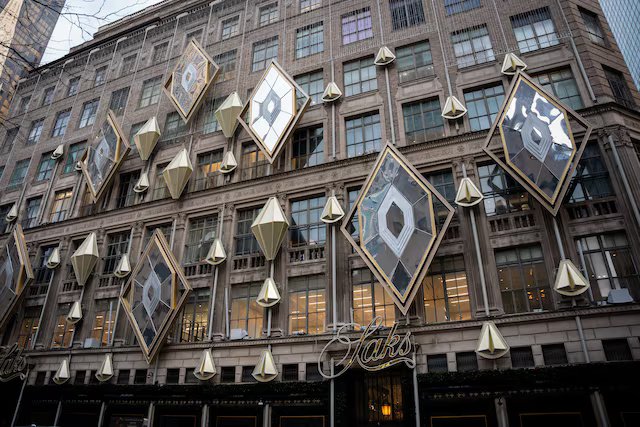
Big luxury brands are gaining power in Saks Global’s bankruptcy talks. Saks depends on these labels to attract shoppers and protect its high end image. That dependence gives luxury giants leverage over smaller vendors.
Luxury Leaders Push for Early Payments
Saks filed for bankruptcy on January 14. The court approved a $120 million fund for vendors Saks calls “critical.”
In most bankruptcies, critical vendors include service providers like IT firms, consultants, and landlords. They rarely control the negotiations.
This case looks different. Saks relies heavily on a small group of elite brands. Sources say these brands can pressure Saks by slowing or stopping shipments.
Chanel, LVMH, and Kering Hold the Strongest Position
Several top luxury brands have the biggest unpaid claims:
- Chanel: $136 million
- Kering (Gucci owner): $60 million
- LVMH (Louis Vuitton parent): $26 million
Other vendors include Ralph Lauren, Estee Lauder, and Dolce & Gabbana. Their claims are smaller.
Saks has not started critical vendor payments yet. Still, sources say Saks has told some major brands they will likely qualify.
Smaller Vendors Face a Harder Road
Smaller brands are struggling to get meetings with Saks leadership. Some vendors describe the process as unclear and closed off.
This matters because most vendors count as unsecured creditors. In many bankruptcies, unsecured vendors recover little or nothing. When they do recover money, they often wait months.
That puts smaller suppliers in a risky position. They must decide whether to keep shipping products.
Luxury Brands May Gain More Control Over the Case
Critical vendor status can offer more than early payments. It can also give brands influence in how the bankruptcy unfolds.
People close to the talks say Saks’ image depends heavily on a few labels. That makes this bankruptcy unusual. The brands don’t just sell products, they shape Saks’ identity.
Amazon Partnership Raises Concerns
Some luxury brands feel uneasy about Saks’ partnership with Amazon. They don’t want luxury goods linked too closely with mass market retail.
Sources say brands may use the bankruptcy process to push back on that partnership.
Concession Deals Add a Complication
Some luxury brands operate under concession agreements. They keep ownership of inventory until a customer buys it.
Because of that structure, these brands may not count as vendors in the usual way. Saks could pay them through other revenue streams. If that happens, more money could remain for other suppliers.
Smaller Brands Consider Teaming Up
Some smaller vendors may negotiate together. They want Saks to see the value of variety and niche labels.
Still, they face an uphill battle. Saks depends on top luxury names to drive prestige and foot traffic.