
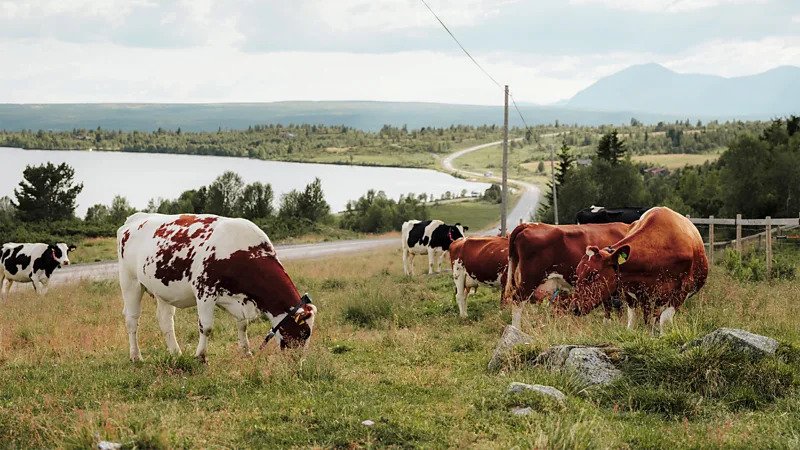
The late evening sun bathed the valley in golden light. Rolling hills, lakes, and birch forests glowed quietly. Somewhere in the distance, a farmer sang to her cows, breaking the stillness.
This was my third day on the Stølsruta, Norway’s historic summer farming trail. The 65km route follows the ancient tradition of seterdrift, where cattle move from lowlands to mountain pastures each summer. This practice dates back to the 12th Century and shaped rural life for centuries.
Norway’s Intangible Cultural Heritage
Seterdrift is more than farming. It includes music, storytelling, and culinary traditions. In 2024, UNESCO recognized seterdrift as an Intangible Cultural Heritage, highlighting its role in Norwegian folklore and cuisine.
The trail crosses the Stølsvidda plateau, home to Norway’s largest remaining network of summer farms. Here, hikers hear cowbells and kulning, a traditional Scandinavian herding song used to call cattle across the fells. Small stalls sell rustic farm foods, including brunost (brown cheese) and risrøt (sweet rice porridge).
Following the Path of the Herds
I started the hike from Tisleidalen village. Soon, the path disappeared into deep forests labeled as “grazing land,” home to cows, goats, and sheep. Despite roaming freely, the animals return to farmsteads each evening for milking.
After two hours, the forest opened onto a wide valley. The trail climbed toward Svenskeknippa, its highest point. Smoke drifted from scattered farmsteads marking the first night’s stop at the quiet hamlet of Tyrishølt.
History of Norway’s Summer Farms
A hundred years ago, Norway had 100,000 summer farms. Today, fewer than 1,000 remain. Støls, the simple wooden lodgings and barns, date back to at least the 7th Century. They allowed lowland fields to grow crops while livestock grazed uphill.
Local farmer Katharina Sparstad of the Norwegian Mountain Farming Culture Board explained that summer farming may date back 4,000 years. Bronze Age stone carvings suggest butter was melted as offerings to the Sun. By the 12th Century, summer farming was firmly part of Norwegian life.
Preserving a Vanishing Tradition
The trail is filled with reminders of this history. Wooden mjølkerampe once loaded dairy products to transport downhill. Summer farms produced essential cheese and butter for survival in remote regions. Farmers argue that free grazing produces rich milk and fragrant cheeses still prized today.
Along the Stølsruta, hikers witness a living tradition that shaped rural Norway. The combination of alpine pastures, wildflowers, and music makes this trail a unique cultural experience.